
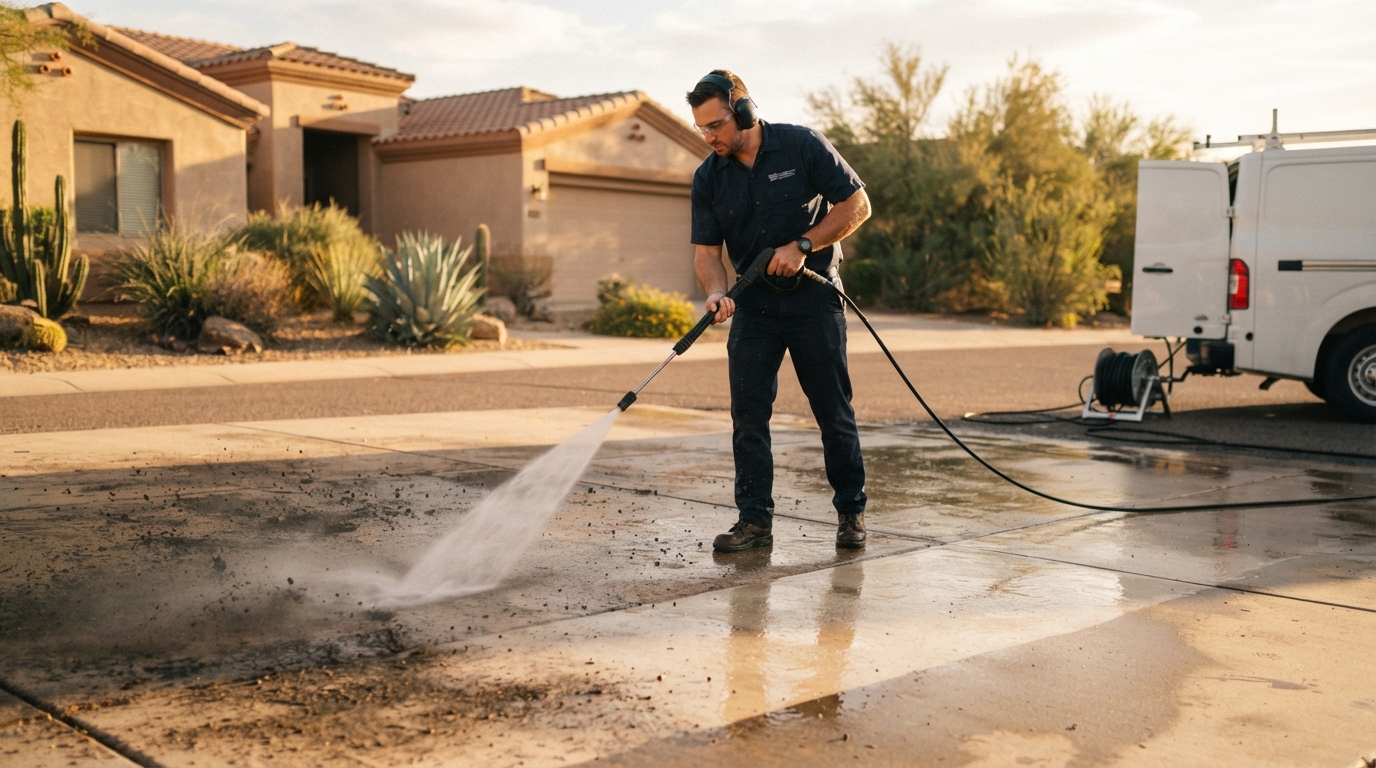
Simply put:
-
Residential pressure washing removes built-up dirt, grime, and staining from driveways, patios, walkways, and other exterior surfaces using high-pressure water.
-
Homeowners in Las Vegas, NV should confirm wash water disposal, surface type, and scheduling details before booking.
-
Desert dust, hard water deposits, and seasonal watering rules make timing and technique especially relevant in this region.
Pressure washing uses a concentrated stream of water, often combined with cleaning solution, to strip away dirt, algae, and stains that regular rinsing cannot touch. For homeowners weighing whether to tackle this job themselves or bring in a contractor, understanding the process beforehand helps avoid damaged surfaces, wasted water, or disappointing results.
Residential pressure washing in Las Vegas, NV is most commonly requested for driveways, patios, pool decks, garages, sidewalks, and sealed pavers, since these surfaces accumulate grime, mineral deposits, and tire marks over time. A contractor will typically inspect the surface material first, since concrete, pavers, and sealed stone each respond differently to pressure levels and cleaning agents. Matching the equipment setting to the surface is one of the more technical parts of the job that is easy for an untrained operator to get wrong.
How the Service Process Typically Works
A residential pressure washing visit generally follows a predictable sequence, regardless of which exterior surfaces are involved.
-
Surface assessment to identify staining type, material, and any pre-existing damage
-
Pre-treatment with a cleaning solution on heavily soiled or oil-stained areas
-
Pressure washing at a calibrated PSI setting appropriate to the surface
-
Rinse and inspection for missed spots or streaking
-
Optional sealing step for pavers or porous stone to add a protective finish
Professional-grade washers used for this kind of work commonly generate output in the 2,000 to 4,000 PSI range, which is strong enough to lift ground-in dirt without excessive water use on a single pass.
Local Factors That Affect Scheduling and Results
Climate and water policy in the Las Vegas, NV area directly influence when and how pressure washing should be scheduled. Desert dust accumulates quickly on exterior concrete and pavers, and hard water residue from sprinklers or monsoon storms can leave mineral staining that regular hosing will not remove.
Outdoor water use carries added weight locally because seasonal irrigation rules apply throughout the year. The Southern Nevada Water Authority limits landscape irrigation to one assigned day per week from November through February, with different schedules during spring, summer, and fall months. While these specific restrictions target landscape irrigation rather than pressure washing, they reflect a broader regional emphasis on conserving outdoor water, which is a useful point of context when scheduling any service involving water runoff.
Homeowners should also ask how a contractor manages wash water runoff, since allowing dirty water to flow into storm drains is a common source of environmental violations tied to pressure washing work, as outlined in EPA-related best management practices for pressure washing businesses. Directing runoff toward landscaped areas rather than storm drains is one of the simpler compliance steps a residential job can take.
Comparing DIY and Professional Approaches
The table below outlines practical differences homeowners should weigh before deciding how to proceed.
|
Factor |
DIY Pressure Washing |
Professional Service |
|
Equipment |
Consumer-grade washer, limited PSI control |
Commercial-grade equipment with adjustable settings |
|
Surface risk |
Higher risk of etching concrete or stripping sealant |
Technique matched to surface material |
|
Water management |
Runoff often undirected |
Typically directed away from storm drains |
|
Time investment |
Several hours per project |
Scheduled visit, faster completion |
Surfaces like sealed pavers or older concrete are more forgiving in professional hands, since excessive pressure or the wrong nozzle angle can etch or discolor material that took years to develop its finish.
Frequently Asked Questions
How often should residential pressure washing be scheduled? Most driveways, patios, and walkways benefit from a cleaning once or twice a year, though homes near heavy dust exposure or landscaping with sprinklers may need more frequent attention.
Can pressure washing damage concrete or pavers? Yes, if the PSI setting is too high or the nozzle is held too close to the surface, it can etch concrete or dislodge paver sand and sealant.
Is sealing necessary after pressure washing pavers? Sealing is optional but commonly requested afterward to add a glossy look and extra protection against future staining.
Does the service use chemicals that affect landscaping? Reputable providers typically use eco-friendly solutions and direct runoff away from grass and garden beds to limit plant exposure.
Final Thoughts and Next Steps
Powell Window Cleaning is based in USA and serves customers across Las Vegas, NV, offering window cleaning and Powell Window Cleaning listings that include pressure washing among its documented exterior services.
Published details for Powell Window Cleaning Washing Services cover driveway, patio, and walkway cleaning methods available to area homeowners.