Quick take:
- Brain injury rehabilitation combines therapist-guided clinical care with structured activity to rebuild communication, movement, and daily living skills.
- Animal-assisted approaches and nature-based settings are used alongside conventional speech, occupational, and physical therapy to support recovery.
- Programs in the USA serve patients of all ages, including those recovering from traumatic brain injury.
A brain injury does not have to mean permanent loss of independence. Structured rehabilitation, delivered by licensed therapists and reinforced through consistent practice, helps many patients regain communication, mobility, and daily function over time.
Patients and families researching options can Learn More About Nature’s Edge Therapy Center Inc to understand how animal-assisted methods are incorporated into therapy sessions for people recovering from traumatic brain injury and related conditions. This approach pairs licensed clinical therapy with structured animal interaction, a model documented among providers serving patients across the USA.
What Brain Injury Rehabilitation Involves
Recovery after a traumatic brain injury is rarely a single treatment. It typically draws on several therapy disciplines working together toward shared functional goals.
- Speech-language therapy addresses communication, swallowing, and cognitive-linguistic skills affected by injury.
- Occupational therapy rebuilds the fine motor and daily living skills needed for independence.
- Physical therapy restores strength, balance, and mobility.
According to the a person with a moderate or severe TBI may need specialized medical care, such as rehabilitation, after their injury, which may include getting help with re-learning skills, such as driving and remembering things, and getting back to work. The CDC’s guidance on TBI recovery notes that the goal of TBI rehabilitation is to improve the overall quality of life for persons living with a TBI and lower the chance for a TBI-related disability, helping with daily tasks, engagement with family, and community participation.
How Animal-Assisted and Nature-Based Methods Support Recovery
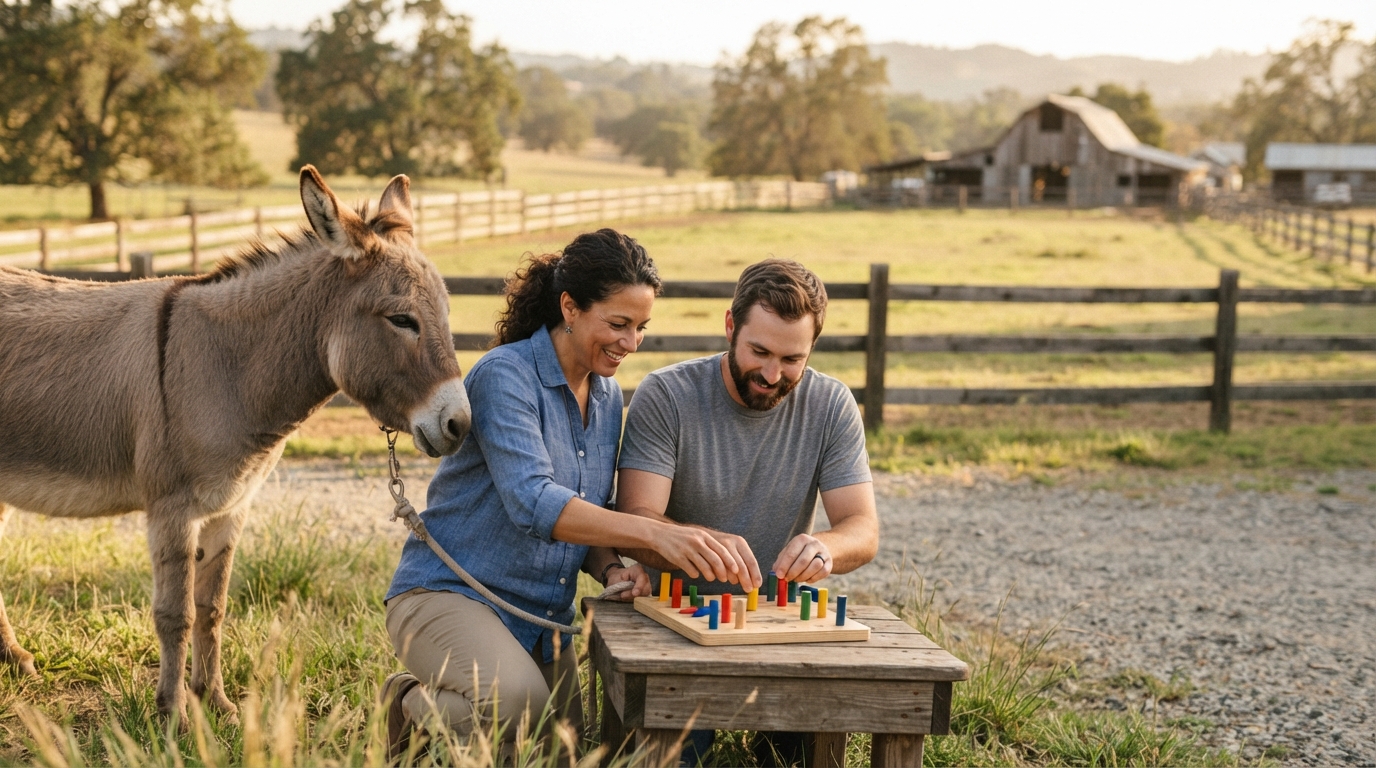
Some rehabilitation providers extend conventional therapy into outdoor and animal-assisted settings designed to increase patient motivation and engagement. One documented model in the USA uses this structure for patients recovering from brain injury and related neurological conditions.
- Animal-assisted therapy is a therapist-guided experience designed to improve a patient’s mental, physical, social and emotional functioning through interactions with an animal.
- Therapy animals used in these programs can include dogs, cats, a donkey, a llama, pot-bellied pigs, a parrot, and sheep, each chosen for their characteristics and contributions in relation to the patient’s specific goals.
- Sessions may build functional skills directly, since patients form complete sentences by greeting and conversing with animals, sequence actions by giving commands to them, read to them and practice directional concepts, and gain motor skills by walking, running, or throwing toys for them to retrieve.
This model pairs with conditions commonly treated in nature-based outpatient settings, which specialize in addressing a range of conditions including autism, traumatic brain injury, cerebral palsy, dyslexia, childhood apraxia, neurodiversity, and trauma-informed care.
Comparing Rehabilitation Settings
|
Setting |
Primary Focus |
Typical Activities |
|
Hospital-based inpatient rehab |
Acute medical stabilization and early recovery |
Clinical therapy sessions, medical monitoring |
|
Standard outpatient clinic |
Ongoing skill-building after discharge |
Scheduled speech, OT, and PT sessions |
|
Nature-based / animal-assisted outpatient |
Skill-building reinforced through structured outdoor activity |
Speech, OT, and PT integrated with animal interaction and outdoor tasks |
Each setting serves a role depending on injury severity and stage of recovery. Many patients move between settings as their needs change, starting with acute hospital care before transitioning to outpatient services.
What Families Should Expect During Treatment
Rehabilitation outcomes depend heavily on consistency and individualized goal-setting between therapists, patients, and families.
1. An initial evaluation identifies specific communication, motor, or cognitive deficits.
2. Therapists set measurable, functional goals tied to daily life tasks.
3. Sessions are scheduled regularly, often combining multiple therapy disciplines.
4. Progress is reassessed periodically and the plan adjusted accordingly.
The CDC’s facts on TBI note that people with a moderate or severe TBI may need ongoing care, such as rehabilitation services, to help with their recovery. Families in the USA evaluating options should ask providers directly about licensing, therapy disciplines offered, and how progress is measured over time.
Frequently Asked Questions
How long does brain injury rehabilitation typically take? Recovery timelines vary widely based on injury severity, age, and overall health. Some patients progress over months, while others require ongoing therapy for years.
Is animal-assisted therapy a replacement for standard rehabilitation? No. It is typically used alongside conventional speech, occupational, and physical therapy rather than instead of it, as a way to increase patient engagement during sessions.
Who can benefit from this type of rehabilitation? Patients of varying ages recovering from traumatic brain injury, along with related conditions such as cerebral palsy, stroke, and developmental delays, may benefit from structured, multidisciplinary rehabilitation.
Does insurance typically cover brain injury rehabilitation? Coverage varies by provider, diagnosis, and insurance plan. Families should confirm specific coverage details directly with their therapy provider and insurer.
Exploring rehabilitation options for someone recovering from a brain injury? Nature’s Edge Therapy Center Inc. offers outpatient therapy that incorporates animal-assisted and nature-based activities alongside therapist-guided care. Its approach uses structured interactions and activities to support the development of communication, movement, and everyday living skills. Contact the center to learn more about its therapy programs and discuss whether its approach may be suitable for your loved one. Visit Nature’s Edge Therapy Center Inc. on Google Maps for directions and contact details.