Short answer:
• Waterproof flooring resists moisture damage in kitchens, bathrooms, basements, and entryways, unlike water-resistant products that only tolerate limited exposure.
• Common categories include rigid core luxury vinyl, waterproof laminate, and porcelain or ceramic tile, each with different durability and installation needs.
• Material choice depends on moisture exposure, subfloor condition, and budget, with professional assessment helping match the right product to a specific room.
Homeowners searching for flooring that can withstand spills, humidity, or flooding typically want a product built to handle sustained water contact without warping, swelling, or developing mold underneath. Waterproof flooring differs from water-resistant flooring in that it is engineered to prevent moisture penetration through the core material, not just the surface layer. This distinction matters most in rooms where standing water or high humidity is a regular possibility.
Basements, bathrooms, laundry rooms, and kitchens are the spaces where this performance gap becomes noticeable. A product rated water-resistant may survive a quick spill if wiped up fast, but it can still suffer edge swelling or delamination if water sits for hours. Waterproof-rated materials are formulated to resist that kind of prolonged exposure, which is why they are frequently recommended for below-grade installations and high-traffic wet areas.
Common Waterproof Flooring Materials
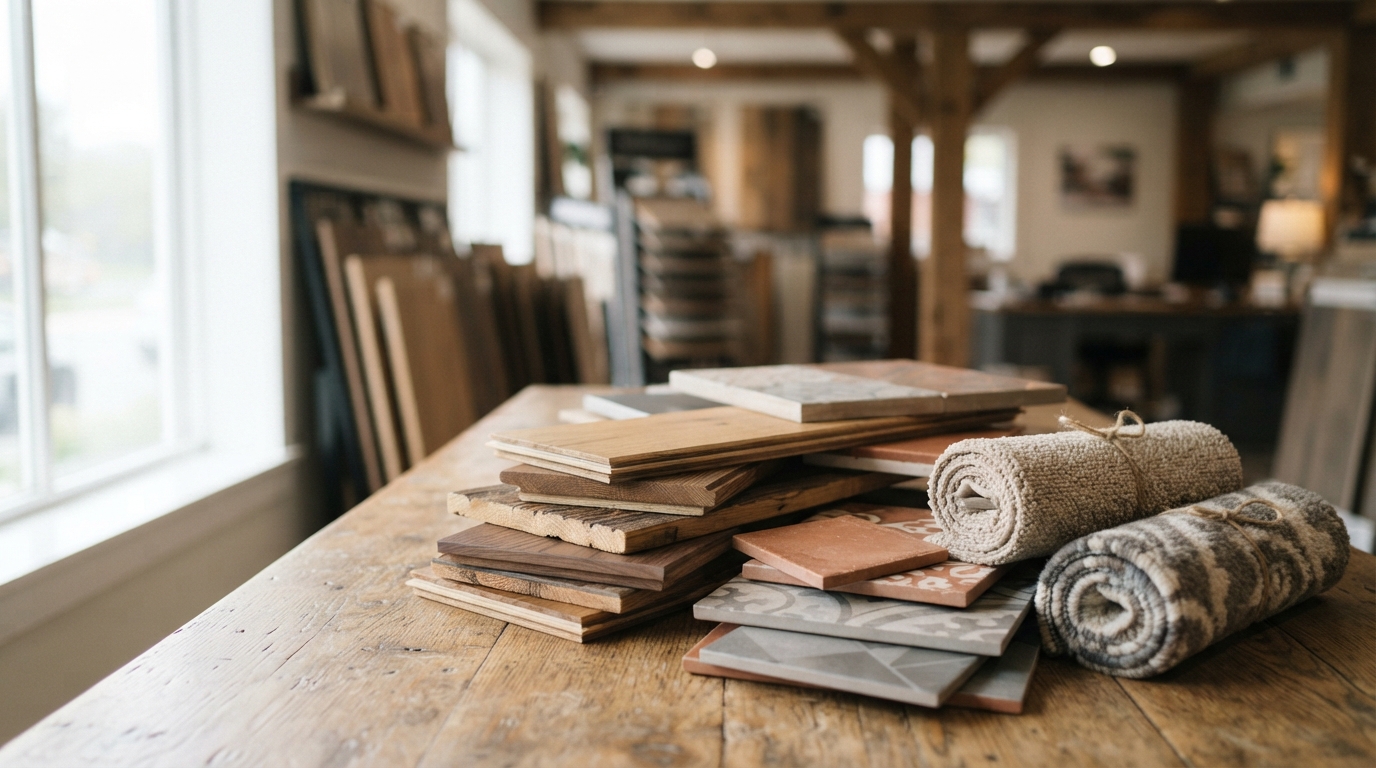
Several flooring categories are marketed as waterproof, though their construction and performance vary.
• Rigid core luxury vinyl plank (LVP): A dense core layer, often stone-polymer or wood-polymer composite, makes this one of the most water-tolerant options available for residential use.
• Waterproof laminate: Standard laminate uses a fiberboard core prone to swelling, but newer waterproof laminate lines use modified cores designed to resist moisture intrusion at the seams.
• Porcelain and ceramic tile: Naturally water-resistant when properly sealed and grouted, tile remains a long-standing choice for bathrooms and entryways.
• Sheet vinyl: Installed in large sections with minimal seams, sheet vinyl reduces the number of entry points where water could reach the subfloor.
Each material handles moisture differently, so matching the product to the room’s specific exposure level is a practical first step before comparing colors or finishes.
Comparing Waterproof Flooring Types
| Material | Water Resistance Level | Typical Use Case | Maintenance Notes |
| Rigid core LVP | High | Kitchens, bathrooms, basements | Regular sweeping, damp mopping |
| Waterproof laminate | Moderate to high | Living areas, low-moisture kitchens | Avoid standing water on seams |
| Porcelain/ceramic tile | High (with sealed grout) | Bathrooms, entryways, mudrooms | Periodic grout sealing required |
| Sheet vinyl | High | Laundry rooms, basements | Simple cleaning, seam inspection |
Climate and Subfloor Considerations in Louisville, KY
Homes in Louisville, KY contend with humid summers and seasonal rainfall, conditions that make moisture-resistant subfloor preparation especially relevant for ground-level and below-grade rooms. According to the EPA’s indoor air quality guidance, controlling moisture is central to preventing mold growth in residential spaces, which reinforces why material selection and proper installation matter as much as the flooring surface itself. Older housing stock in the region may also have uneven or moisture-prone subfloors that require leveling or vapor barriers before installation.
Before choosing a product, homeowners in this area typically benefit from considering:
1. Whether the room is above or below grade, since basement installations face different moisture pressure than upper floors.
2. The condition of the existing subfloor, including any history of past water intrusion.
3. Expected foot traffic and whether the household includes pets or young children.
4. Long-term maintenance expectations, since some materials require more upkeep than others.
Installation and Maintenance Basics
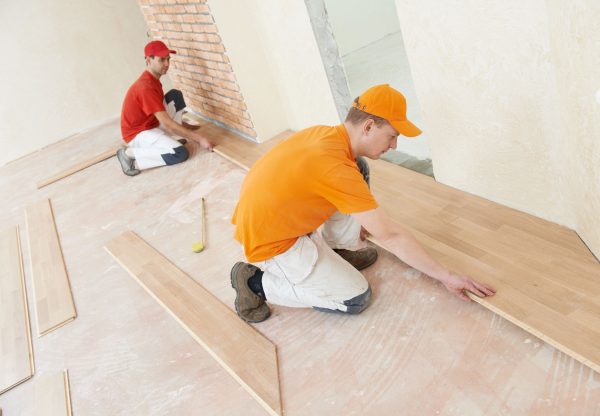
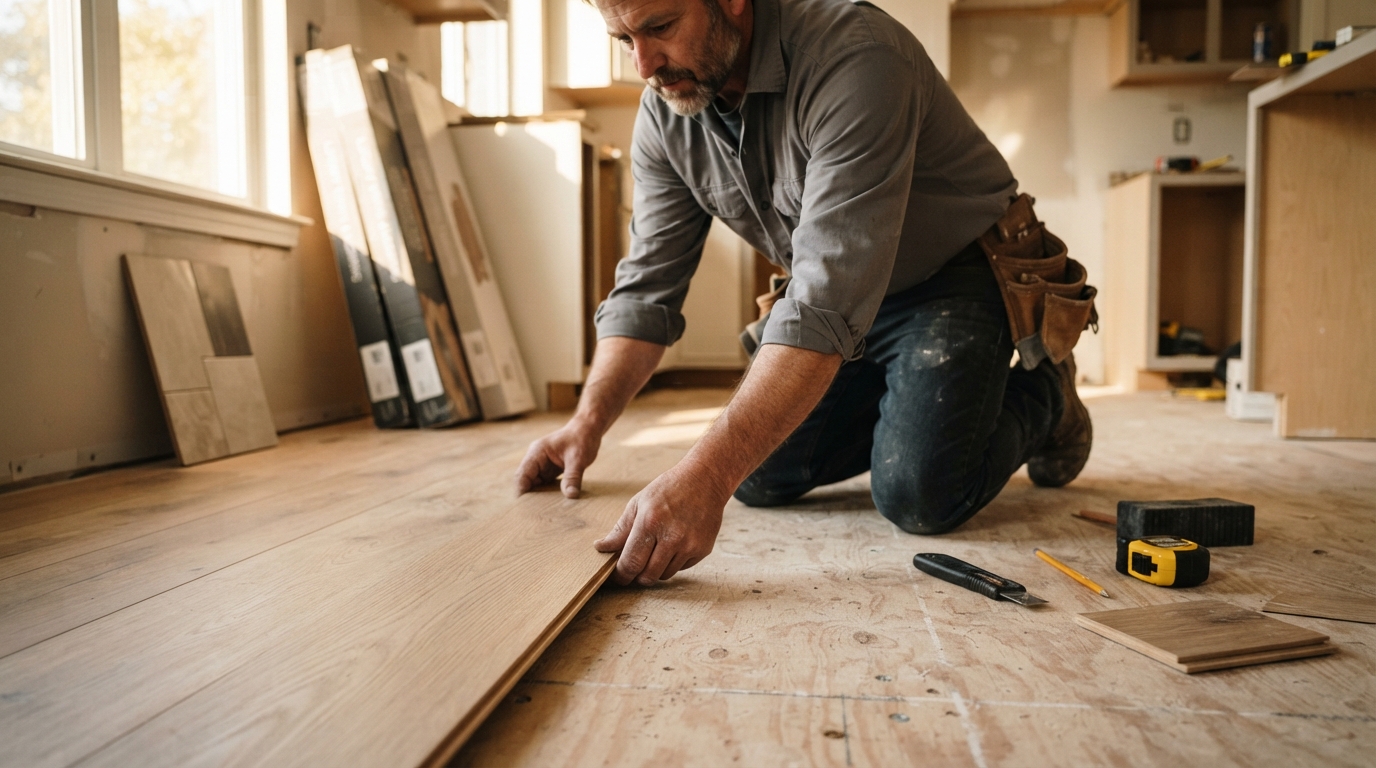
Proper installation affects how well any waterproof-rated product performs over time. Seams, transitions, and edges along walls or cabinetry are the most common points where water can bypass the flooring and reach the subfloor. Click-lock LVP and waterproof laminate systems rely on tight seam engagement, while tile depends on consistent grout sealing to maintain its water resistance.
Routine maintenance remains straightforward across most waterproof categories: prompt cleanup of standing liquid, regular sweeping to prevent grit damage, and periodic inspection of seams or grout lines. Manufacturer warranties often specify maintenance requirements, so reviewing those terms before installation can help homeowners avoid voiding coverage.
Frequently Asked Questions
Is waterproof flooring completely immune to water damage? No single flooring product is entirely impervious to water damage under all conditions. Waterproof-rated materials resist moisture penetration through the core far better than water-resistant alternatives, but prolonged flooding or poor installation can still cause problems.
Can waterproof flooring be installed directly over concrete? Many rigid core LVP and sheet vinyl products can be installed over concrete subfloors, provided the surface is level, clean, and free of active moisture issues. A moisture test is often recommended before installation in below-grade spaces.
Does waterproof flooring cost more than standard flooring? Pricing varies by material and brand, with rigid core LVP and waterproof laminate often priced competitively against standard versions of the same product line. Tile costs depend heavily on material grade and installation complexity.
Local Flooring Resources
Based in USA, Mees Tile & Marble serves customers across Louisville, KY.
Current material options and specifications for Read More About Waterproof Flooring are published for homeowners comparing products before installation.