
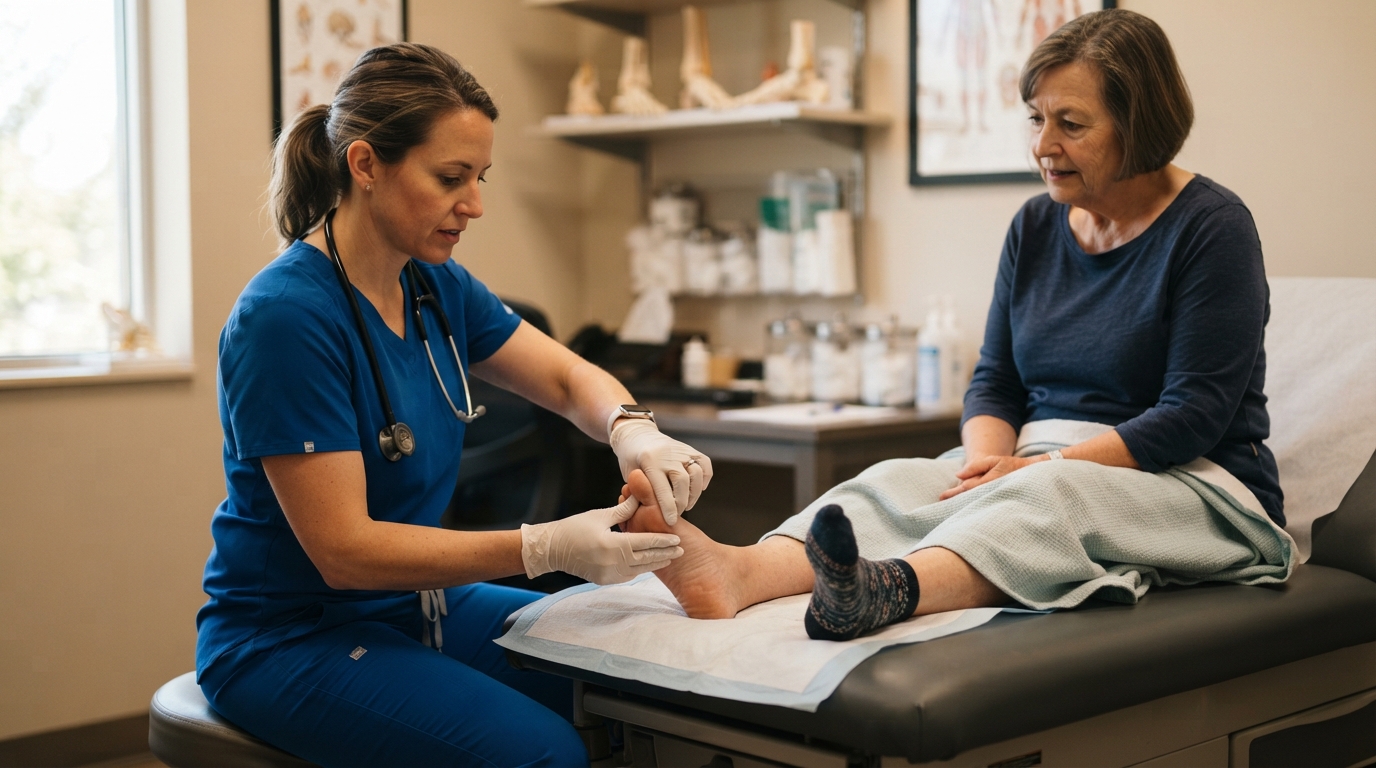
• Bunion treatment ranges from conservative measures like orthotics and footwear changes to surgical correction for severe cases.
• Nonsurgical care manages pain but does not shrink the bony bump, so early evaluation helps guide the right approach.
• Podiatric evaluation determines whether conservative care or surgery, including procedures like Lapiplasty, best fits the deformity’s severity.
A bunion is a bony bump that forms at the base of the big toe joint, and effective care typically starts with conservative measures before progressing to surgical correction when pain or joint misalignment persists. Most people can find relief through nonsurgical methods, though understanding when those methods stop working is key to protecting long-term mobility.
Choosing the right Bunion Treatment Cypress TX depends on how far the joint has shifted and how much daily pain the deformity causes. According to the American Academy of Orthopaedic Surgeons, bunion pain is relieved in most cases by wearing wider shoes with enough toe room and using other simple treatments to reduce pressure on the big toe. When conservative steps stop easing symptoms, a podiatric evaluation can clarify whether surgical correction is the more practical next step.
How Bunions Progress and Why Timing Matters
Bunions rarely appear overnight. The joint gradually shifts out of alignment, and bunions often don’t need medical treatment in early stages, though monitoring changes is still worthwhile.
• Mild bunions may only need wider shoes and occasional padding.
• Moderate bunions often benefit from custom orthotics and activity adjustments.
• Severe bunions that limit walking or cause persistent pain may require surgical evaluation.
Although nonsurgical treatment cannot actually reverse a bunion, it can help reduce pain and keep the bunion from getting worse. This distinction matters for anyone weighing short-term comfort against long-term correction.
Nonsurgical Approaches Worth Trying First
Conservative care is usually the starting point for newly diagnosed bunions. Orthotic devices are shoe inserts that support the feet, and some patients need over-the-counter options while others require custom-made inserts. Other common conservative steps include:
• Switching to shoes with a wider toe box
• Using toe spacers or protective pads to reduce friction
• Applying ice to manage swelling after activity
• Taking NSAIDs short-term for pain and inflammation, as advised by a provider
Braces or splints have not been shown to permanently fix bunions, so these tools are generally positioned as comfort aids rather than corrective solutions.
When Surgical Correction Becomes the Next Step
Surgery becomes a relevant option once conservative care no longer controls pain or when the deformity interferes with walking. Other treatments can manage bunion symptoms, but a bunionectomy is the only way to permanently remove the extra growth and realign the foot, and a surgeon might suggest bunion surgery if walking is extremely painful and other treatments haven’t helped. Surgical techniques vary by severity and anatomy:
|
Approach |
Best Suited For |
Key Consideration |
|
Orthotics and footwear changes |
Mild to moderate bunions |
Manages symptoms, does not reduce bump size |
|
Lapidus-type fusion |
Severe bunions with joint instability |
Realigns the metatarsal and cuneiform joint |
|
Minimally invasive surgical techniques |
Select bunion types |
Growing in popularity among surgeons, though not suitable for all bunions |
Recovery timelines and techniques differ by case, which is why imaging and a physical exam typically guide the final recommendation.
Based in USA, Cypress Foot & Ankle Center’s podiatric team serves patients across Cypress, TX, offering evaluation and treatment planning for bunion-related foot pain. The practice’s listed services on its Google Business Profile include conservative and surgical bunion care alongside custom orthotics and related foot and ankle treatments.
Frequently Asked Questions
Can a bunion go away without treatment? No. Shrinking a bunion naturally is not possible, and the only true way to correct a bunion is with surgery. Conservative care can still reduce pain and slow progression.
Is bunion surgery always necessary? Not always. Many patients manage symptoms for years with footwear changes, orthotics, and activity modification before surgery becomes necessary, if it ever does.
What happens during a typical bunion exam? A podiatrist reviews symptoms, checks joint alignment, and often orders X-rays to determine severity before recommending conservative or surgical care.
Are bunions more common in certain groups? Anyone can get a bunion, though they are more common in women, partly because tight, narrow shoes squeeze the toes together.
Scheduling and current office information for Cypress Foot & Ankle Center are available for patients considering a foot and ankle evaluation.