
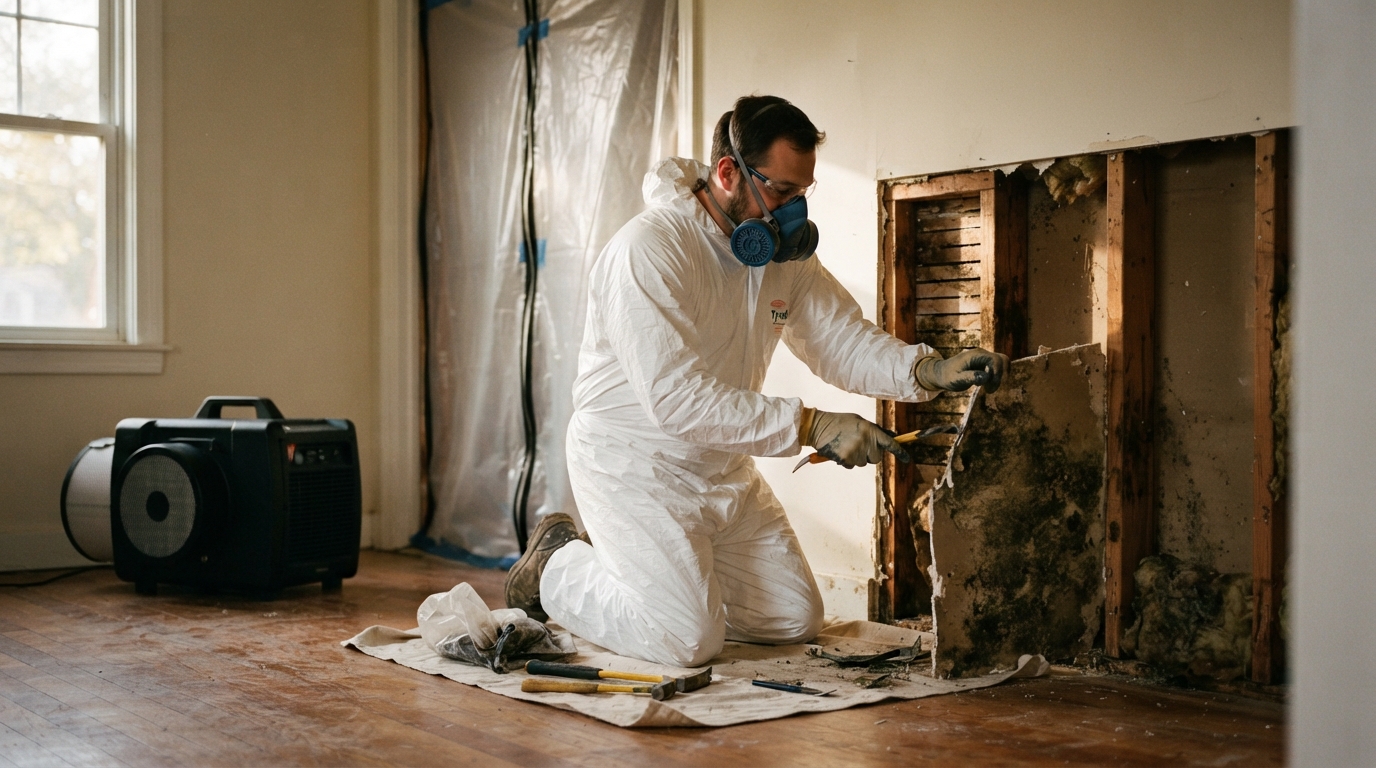
• Mold remediation is the process of identifying, containing, removing, and preventing the return of mold growth caused by moisture or water damage.
• Professional remediation typically involves source control, containment, physical removal, and post-cleanup verification rather than surface-level cleaning.
• Humid, flood-prone regions such as Fort Myers, FL face elevated mold risk, making prompt moisture control especially important.
Mold remediation refers to the structured process of locating moisture sources, containing affected areas, removing mold-damaged materials, and confirming the space is safe to reoccupy. It is distinct from simple cleaning because it addresses the underlying water problem rather than just the visible growth on a surface.
Homeowners searching for Mold Remediation services are usually dealing with a specific trigger: a roof leak, a burst pipe, flooding, or long-term humidity that has allowed colonies to spread across walls, flooring, or HVAC components. Understanding how the process works helps property owners recognize when a problem has moved beyond a do-it-yourself fix and into the territory requiring trained remediation personnel.
Why Mold Becomes a Problem in Humid Climates
Mold spores are present in nearly every indoor environment, but they only become a structural or health concern when moisture allows them to colonize. Warm, humid regions create ideal growing conditions.
• Materials that stay wet for more than 24 to 48 hours are at high risk of developing mold growth, according to EPA’s mold guidance.
• Flat terrain and frequent storm activity in parts of Southwest Florida can trap floodwater, extending the time materials remain saturated.
• Air conditioning systems that run constantly to offset heat and humidity can become secondary sources of mold if condensation is not managed.
Fort Myers, FL homes face particular exposure because of seasonal storms and consistently high humidity levels. Older housing stock with original ductwork or roofing is often more susceptible to hidden moisture intrusion behind walls or under flooring.
How Professional Mold Remediation Works
Remediation is not a single action but a sequence of steps designed to stop regrowth as well as remove existing colonies.
1. Inspection and moisture source identification – Technicians locate the water intrusion point before any physical work begins, since remediation efforts fail if the source is not addressed.
2. Containment – Plastic sheeting and negative air pressure are commonly used for larger affected areas to prevent spores from spreading to unaffected rooms.
3. Physical removal – Damaged porous materials, such as drywall or insulation, are removed and discarded, while non-porous surfaces are cleaned with antimicrobial treatments.
4. Drying and dehumidification – Industrial equipment reduces residual moisture to prevent recurrence.
5. Post-remediation verification – A visual inspection, and sometimes sampling, confirms the area meets acceptable clearance standards before reoccupation.
This sequence reflects the general structure outlined in federal mold cleanup guidance for homeowners and renters, which emphasizes fixing the water problem alongside the mold itself.
DIY Cleanup Versus Professional Remediation
Not every mold issue requires a remediation company, but size and location matter significantly when deciding how to respond.
|
Factor |
Small DIY-Eligible Area |
Larger Professional Job |
|
Size |
Under about 10 square feet |
Over 10 square feet |
|
Containment needed |
Minimal |
Plastic sheeting, negative air pressure |
|
Equipment |
Household cleaning supplies, PPE |
HEPA vacuums, industrial dehumidifiers |
|
Common cause |
Minor shower or window condensation |
Pipe bursts, roof leaks, flooding |
Homeowners dealing with contamination behind walls, inside HVAC systems, or following a flood event are generally better served by a trained remediation provider rather than a surface-level cleaning attempt.
Based in Lehigh Acres, FL, the mold remediation team at 911 Restoration of Fort Myers extends service coverage to property owners throughout Fort Myers, FL and nearby communities. The company’s documented process includes inspection, containment, removal, and restoration steps consistent with standard industry remediation practices.
Frequently Asked Questions
How long does mold remediation typically take? Timeframes vary by the extent of contamination, but larger projects involving structural material removal and extended drying can take one to two weeks or longer to complete.
Can mold return after remediation is finished? Yes, if the original moisture source was not fully corrected. Addressing the water problem alongside mold removal is necessary to prevent recurrence.
Is air testing required before remediation begins? Air or surface sampling is often unnecessary when visible mold growth is already confirmed, since the presence of mold is the determining factor rather than spore counts.
What signs suggest a mold problem needs professional attention? Recurring growth, mold suspected inside wall cavities, or contamination following a flood or pipe failure are indicators that professional remediation is the appropriate next step rather than a DIY approach.
Final Note on Addressing Mold Promptly
Mold problems tend to expand quickly once moisture is present, so early identification of the water source remains the most reliable way to limit damage and remediation cost. Current information on local mold remediation services for 911 Restoration of Fort Myers is published for property owners evaluating next steps.