
In brief:
-
Fence installation typically moves through site evaluation, material selection, utility marking, post setting, and final walkthrough.
-
Local permit rules and property line surveys often affect project timelines in Blanchard, OK.
-
Material choice (wood, vinyl, chain-link, ornamental iron) affects both installation steps and long-term maintenance needs.
A professional fence installation generally follows a predictable sequence: measuring the property, confirming boundaries, marking utilities, setting posts, and attaching panels or rails. Understanding each stage helps homeowners plan for permits, material delivery, and the realistic timeline a project requires.
Fence installation Blanchard OK begins long before the first post goes into the ground. A site visit usually confirms property lines, soil conditions, and any slope or drainage issues that could affect post depth or fence alignment. Contractors also check local zoning rules, since height limits and setback requirements vary by municipality and property type.
Site Preparation and Material Selection
Before construction starts, several preparatory steps shape how the project unfolds.
-
Utility marking: Calling 811 before digging is a standard step nationwide, since it identifies buried utility lines and helps prevent damage during post-hole digging, according to call811.com.
-
Material selection: Common residential options include wood, vinyl, chain-link, and ornamental iron, each with different installation methods and maintenance needs.
-
Permit confirmation: Many jurisdictions require a permit for fences above a certain height or near property lines, so confirming local rules in advance avoids delays.
Soil type also matters. Rocky or clay-heavy ground, common in parts of Oklahoma, can slow post-hole digging and may require specialized equipment.
Installation Stages Homeowners Can Expect
Once preparation is complete, the physical build generally follows these stages:
-
Layout and marking – string lines and stakes outline the fence path based on the surveyed property boundary.
-
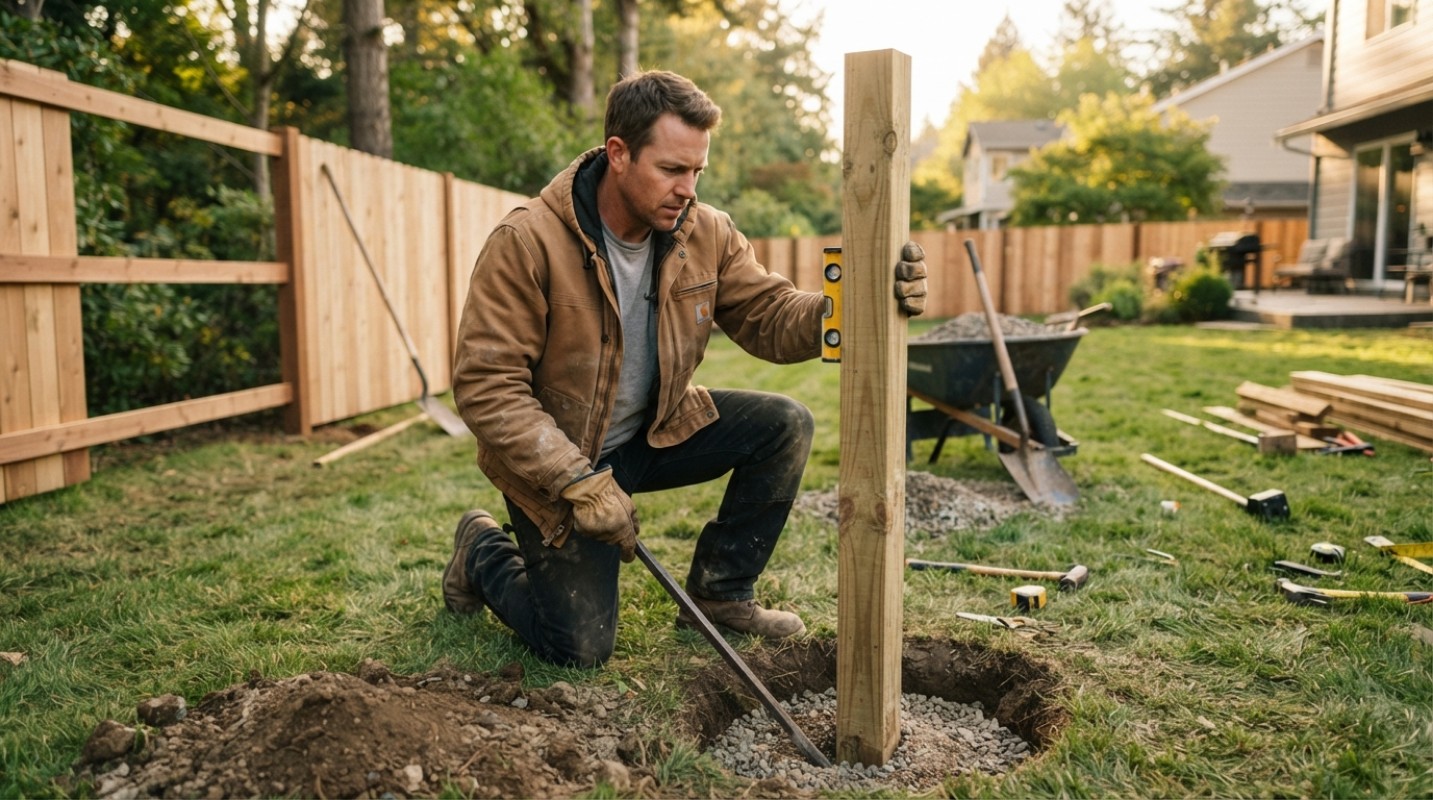
Post hole digging and setting – holes are dug to a depth appropriate for the fence height and soil type, then posts are set in concrete or compacted fill.
-
Rail and panel installation – horizontal rails or panels are attached once posts have cured sufficiently to bear weight.
-
Gate installation – gates are hung and hardware is adjusted for smooth operation.
-
Final walkthrough – the finished fence is inspected for level alignment, secure attachment, and gate function.
|
Fence Material |
Typical Installation Time |
Maintenance Level |
|
Wood |
Moderate |
Periodic staining/sealing |
|
Vinyl |
Moderate to fast |
Low |
|
Chain-link |
Fast |
Low |
|
Ornamental iron |
Slower |
Occasional rust treatment |
Local Considerations for Blanchard, OK
Weather and soil conditions in Blanchard, OK, can affect scheduling, especially in wetter months when saturated ground may reduce post stability. Homeowners should also check whether their property is subject to setback or fence-height rules before ordering materials. Based in the USA, Arrow Fence & Shelter serves customers throughout Blanchard, OK, and the surrounding area.
Property owners researching installation timelines should also factor in weather delays, since concrete curing times for posts can extend if temperatures drop below typical ranges. Confirming material lead times with a supplier in advance helps avoid gaps between site preparation and the actual build.
Frequently Asked Questions
How long does a typical residential fence installation take? Most residential installations are completed within a few days to about a week, depending on fence length, material, and weather conditions.
Do I need a permit before installing a fence? Many municipalities require a permit for fences above a certain height or near property lines, so checking local zoning rules before starting is recommended.
What affects the cost of a fence installation project? Material choice, fence length, gate count, and site conditions such as soil type or slope all influence overall project scope.
Can a fence be installed on uneven ground? Yes, though uneven terrain may require stepped panels or additional grading to maintain consistent height and stability along the fence line.
Final Thoughts
Fence installation involves more coordination than many property owners expect, from utility marking and permit checks to post setting and final alignment review. Current scheduling and service area information for Learn More is published for reference.