
Bottom line:
- Point-of-purchase displays shape in-store buying by capturing attention at the exact moment a shopper is deciding what to buy.
- Floor-standing and pole-based display systems are widely used in the USA because they direct foot traffic and highlight featured products without blocking aisles.
- Material choice, height, and placement affect whether a display actually changes purchase behavior or gets ignored.
Shoppers rarely plan every purchase before entering a store. A large share of buying decisions form in the aisle, which is why the physical structure holding a product often matters as much as the product itself.
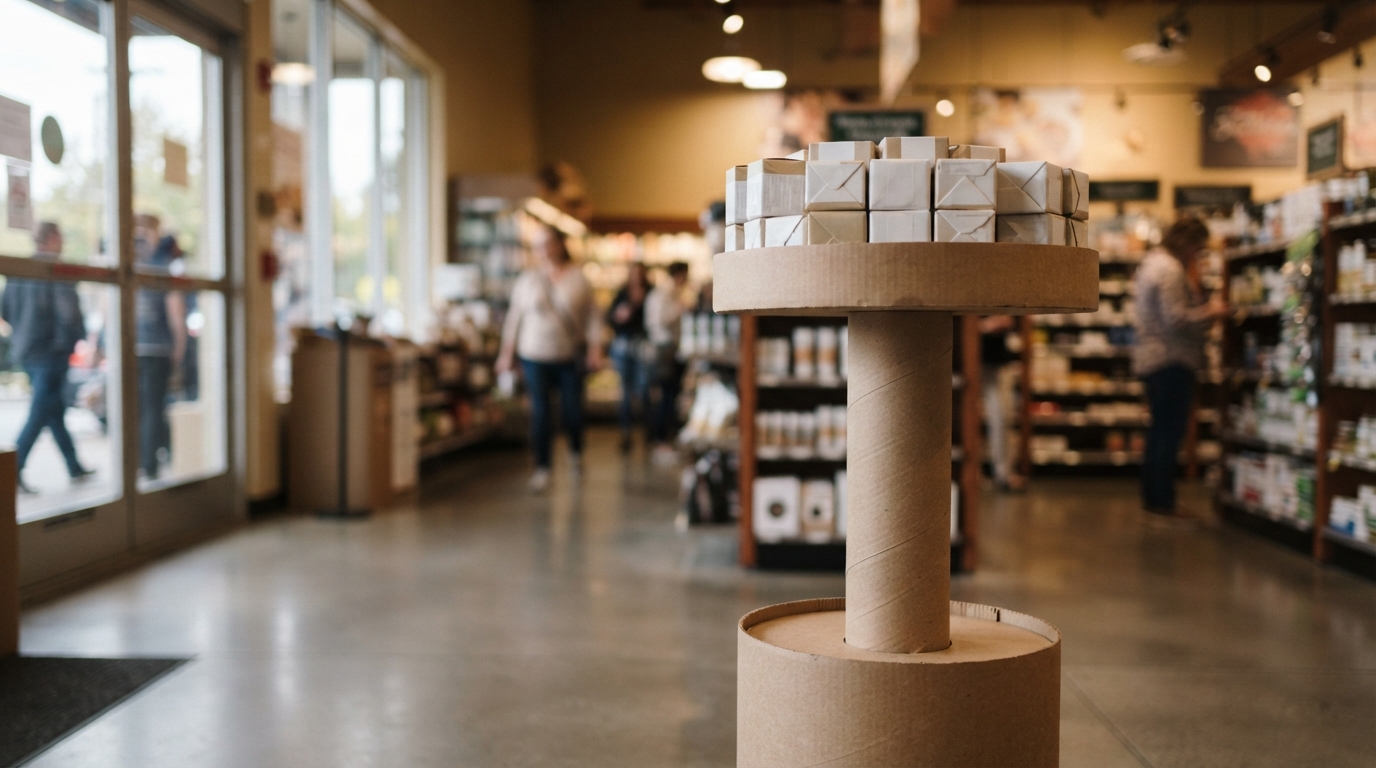
Retail hardware such as Retail Store Display Stands from Callenor gives merchandisers an effective way to position products at shoppers’ eye level, making them stand out from standard shelving. These stands, often designed around a central pole or sturdy frame, are commonly used in grocery, apparel, and specialty retail environments across the USA. They help businesses create dedicated product displays near store entrances, endcaps, and checkout areas, improving product visibility and making merchandise easier for customers to notice and explore.
Paperboard manufacturer Callenor Company, Inc. on Google Maps produces display poles as part of a broader line of paper tubes and cores. The company has supplied display pole components to retail and packaging customers for decades, reflecting a long-standing presence in this specific product category rather than general retail fixtures.
Why Display Placement Changes Shopper Behavior
Placement determines whether a display gets noticed or walked past. Retail research consistently points to a few structural patterns:
- High-traffic zones matter most. A point-of-purchase display guide notes that entrances, main aisles, and checkout zones work best because shoppers naturally slow down there and make quick decisions.
- In-store messaging drives unplanned buys. The same source cites research by Vestcom showing that 72% of shoppers make unplanned purchases based on in-store messaging.
- Visual design alone can sway a purchase. Separate 2026 survey data found that 50% of shoppers say attractive displays drive them to buy impulsively, with half of all shoppers swayed by a good-looking setup.
These patterns suggest the stand itself, not just the product on it, is doing measurable work at the shelf edge.
Materials and Construction That Support Durability
A display stand has to survive repeated handling, restocking, and store traffic without wobbling or collapsing. For retailers sourcing pole-based or tube-based display systems, a few construction factors affect long-term performance:
1. Core material – Spiral-wound paperboard tubes offer rigidity for lightweight to mid-weight product loads while remaining easier to recycle than some plastics.
2. Custom sizing – Height, diameter, and notch or slot configuration need to match the specific product line and shelf footprint.
3. Finish options – Wrapped or coated surfaces affect how a stand looks in-store and how it holds up to handling over a product’s shelf life.
Retailers and brand merchandisers typically work with suppliers who can adjust these specs per campaign rather than relying on a single fixed stand design.
Comparing Common Display Stand Formats
|
Display Format |
Best Placement |
Typical Use Case |
|
Pole-based floor stand |
Entrances, main aisles |
Featured or seasonal product lines |
|
Endcap display |
Aisle ends |
Cross-promotions, bundled items |
|
Counter-top stand |
Checkout zones |
Small, grab-and-go items |
According to the U.S. Small Business Administration guidance on retail merchandising, layout and product presentation are treated as core components of a retail sales strategy rather than secondary decoration. This framing supports why many stores budget separately for display hardware rather than treating it as packaging overhead.
Frequently Asked Questions
Do display stands actually increase sales, or just visibility? Visibility and sales are linked but not identical. Research cited above shows attractive displays influence impulse decisions, though the effect depends on placement, product relevance, and store traffic patterns.
What materials are commonly used in pole-based display stands? Spiral-wound paperboard tubes are a common core material for display poles, often paired with custom end caps or collars depending on the product load and intended shelf life.
Are display stands used the same way across all store types? No. Grocery, apparel, and specialty retailers in the USA tend to position stands differently based on aisle width, traffic flow, and whether the goal is impulse purchase or featured promotion.
How long does a typical retail display stand last in-store? Lifespan depends on material and handling frequency; paperboard-based stands are generally built for a single campaign or seasonal cycle rather than indefinite reuse.
Closing Section
Display stand selection depends on store layout, product type, and how long a promotional cycle needs to run. Retailers evaluating pole-based or tube-based systems typically weigh material durability against campaign length before finalizing a design.
Current listing information for Callenor Company, Inc. on Google Maps is published online for reference on service area and contact details.