
Simply put:
• Common HVAC failures include weak airflow, thermostat errors, refrigerant leaks, and ignition or pilot issues, most of which require diagnostic tools and parts a homeowner cannot access.
• Denver’s cold winters and dry summers put extra strain on furnaces and AC compressors, making seasonal checkups useful for catching problems early.
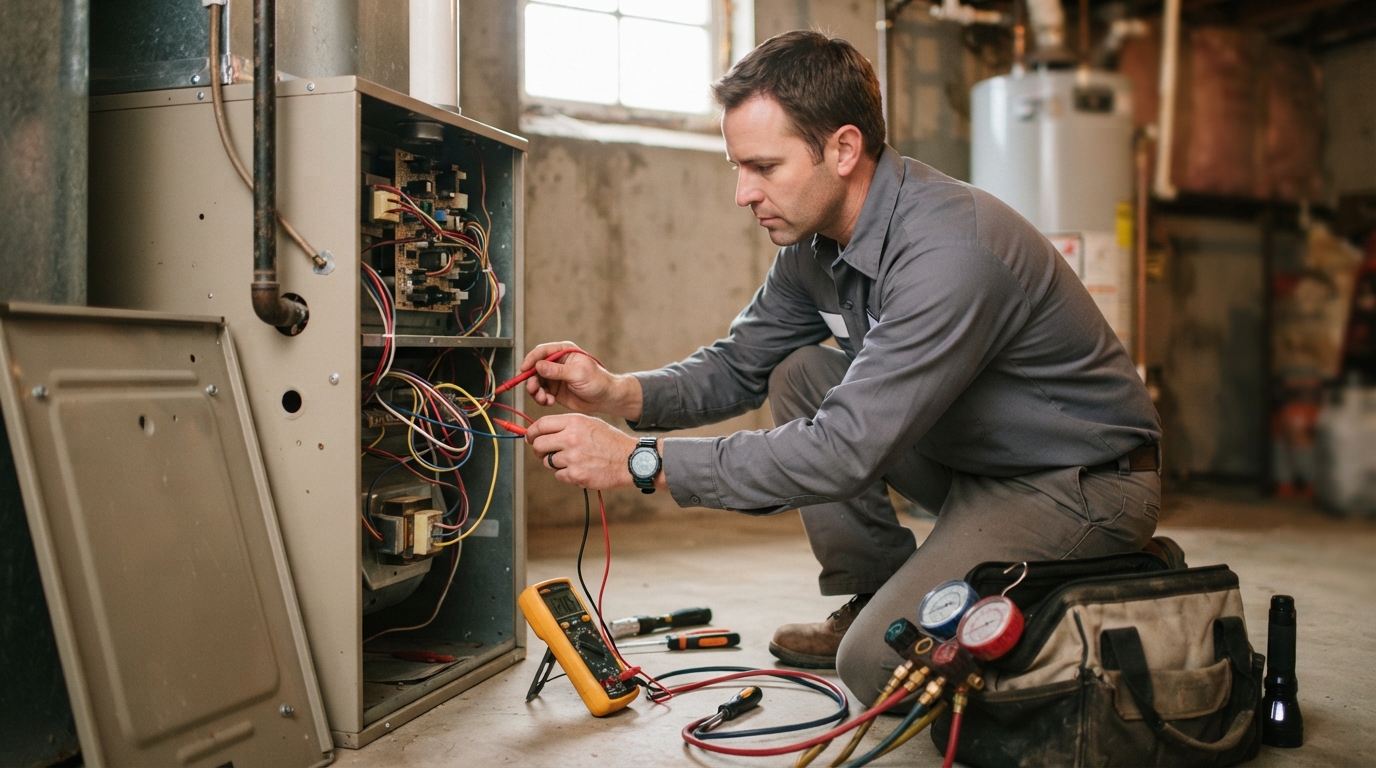
• Professional diagnosis typically includes electrical testing, airflow measurement, and refrigerant checks before a technician recommends a repair or replacement.
A heating or cooling system that stops working as expected is usually signaling a specific mechanical, electrical, or airflow issue rather than a random breakdown. Professional HVAC Repair Services addresses these issues through structured diagnostics, not guesswork, which is why trained technicians can often resolve a problem in a single visit.
Cub Creek Heating & A/C has worked on residential and light-commercial heating and cooling systems for more than two decades, giving context to how recurring HVAC complaints get traced back to their root cause.
Airflow and Ventilation Problems
Weak or uneven airflow is one of the most frequent complaints homeowners report to HVAC technicians.
• Clogged air filters restrict airflow and force the blower motor to work harder.
• Blocked or leaking ductwork reduces the volume of conditioned air reaching certain rooms.
• A failing blower motor or capacitor can cause intermittent or weak air delivery.
Technicians typically inspect the filter, check duct connections, and test blower motor amperage to isolate which component is causing the restriction. In many cases, the fix is as simple as a filter change, though damaged ductwork or a worn motor requires component-level replacement.
Thermostat and Control Failures
A thermostat that misreads temperature or fails to communicate with the system can make an otherwise functional furnace or AC unit seem broken.
1. Wiring issues between the thermostat and the control board can cause the system to short-cycle or stop responding.
2. Dead batteries or power supply faults in smart thermostats interrupt scheduling and remote control features.
3. Incorrect calibration causes the system to run longer than needed or shut off before reaching the set temperature.
Diagnosing control issues involves testing voltage at the thermostat and inspecting the low-voltage wiring that connects it to the furnace or air handler. Replacing a faulty thermostat is usually straightforward, but wiring faults inside walls can take longer to locate.
Refrigerant Leaks and Compressor Strain
Air conditioning systems that run constantly without cooling effectively often point to a refrigerant leak or a struggling compressor. Denver’s IECC Climate Zone 5B designation means the metro area sees cold winters alongside hot, dry summer stretches, which places cyclical stress on compressors as they switch between long idle periods and heavy summer use, according to federal building climate zone data. A licensed technician checks refrigerant pressure, inspects coil and line connections for leaks, and tests compressor amp draw to confirm whether a repair or a full component replacement is the appropriate fix.
|
Symptom |
Likely Cause |
Typical Repair Approach |
|
Weak airflow |
Clogged filter or duct blockage |
Filter replacement, duct inspection |
|
System won’t respond to settings |
Thermostat wiring or calibration fault |
Wiring test, thermostat replacement |
|
AC runs but doesn’t cool |
Refrigerant leak |
Leak detection, recharge or coil repair |
|
Furnace won’t ignite |
Pilot, igniter, or gas valve fault |
Component testing and replacement |
Ignition and Heating Element Issues
Furnaces that fail to ignite or shut off shortly after starting usually involve the ignition system or a safety switch that has detected an unsafe condition.
• A cracked heat exchanger can trigger a safety shutoff and requires immediate professional evaluation.
• A faulty igniter or flame sensor prevents the burner from lighting consistently.
• Gas valve malfunctions can either block fuel flow or allow improper combustion.
Because these components connect to gas lines and electrical circuits, diagnosis and repair are generally left to licensed technicians who can test combustion safety alongside the mechanical fix.
Based in Arvada, CO, Cub Creek Heating & A/C’s service area extends to homes and light-commercial properties throughout Denver, CO, where seasonal temperature swings are common.
Frequently Asked Questions
How long does a typical HVAC repair visit take? Most single-component repairs, such as a capacitor or igniter replacement, are completed within one service visit once the issue is diagnosed.
Can a homeowner fix minor HVAC issues without a technician? Filter changes and thermostat battery replacement are safe for homeowners, but electrical, refrigerant, and gas-related repairs require licensed technicians due to safety codes.
How often should an HVAC system be inspected in Denver, CO? Seasonal inspections before summer and winter are a common practice given the area’s wide temperature range between hot summer days and cold winter nights.
What signs suggest a furnace needs repair rather than replacement? Isolated component failures, such as a bad igniter or thermostat fault, usually point to repair, while a cracked heat exchanger or a system older than its expected lifespan may warrant replacement discussion with a technician.
Scheduling and Service Details
Published contact and service area information for Cub Creek Heating & A/C is available for reference regarding operating hours and location.