In brief:
• Lint buildup, worn belts, and failing heating elements account for most dryer breakdowns in homes across Louisville.
• Catching unusual noises, long drying times, or burning smells early can prevent costly repairs or fire hazards.
• Routine maintenance such as vent cleaning and lint trap care extends appliance life and keeps energy use in check.
A dryer that takes multiple cycles to finish a load, makes grinding noises, or shuts off mid-cycle is usually signaling a mechanical or airflow problem rather than a need for replacement. Identifying the specific symptom early often means the difference between a simple fix and a full appliance breakdown.
Many households search for Dryers troubleshooting advice only after a cycle fails completely, but most warning signs appear well before that point. Reduced airflow, inconsistent heat, or unusual vibration typically show up weeks before a dryer stops working altogether, giving homeowners a window to address the issue.
Recognizing Early Warning Signs
Dryers rarely fail without warning. Specific symptoms point to specific mechanical issues, and catching them early reduces both repair costs and safety risks.
• Longer drying times : Often linked to lint-clogged vents or a failing thermostat restricting airflow.
• Burning or musty smell : Usually indicates lint accumulation near the heating element, a fire risk that should not be ignored.
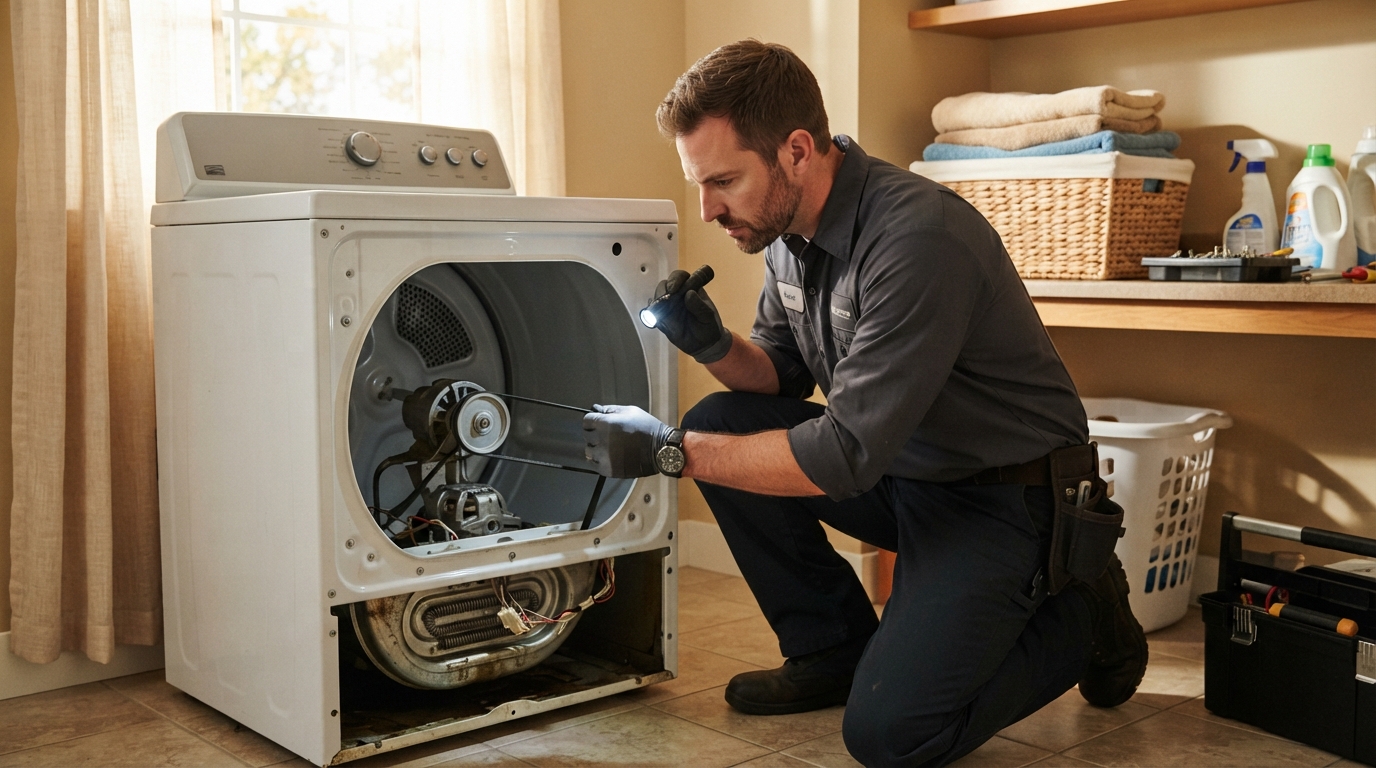
• Loud thumping or squealing : Suggests worn drum rollers, a stretched belt, or a failing motor bearing.
• Dryer stops mid-cycle : Can point to a tripped thermal fuse, which often fails due to restricted airflow overheating the unit.
• No heat at all : Commonly tied to a broken heating element, blown thermal fuse, or faulty igniter in gas models.
Common Mechanical Failures and Practical Fixes
Most dryer issues fall into a handful of categories that homeowners can often identify before calling for professional repair.
| Problem | Likely Cause | Recommended Action |
| Clothes still damp after cycle | Clogged exhaust vent or lint screen | Clean lint trap after every load; inspect vent duct seasonally |
| Dryer won’t start | Faulty door switch or broken belt | Check door latch; inspect belt tension if switch tests fine |
| Excessive noise during operation | Worn drum rollers or glides | Replace rollers; lubricate glides per manufacturer guidance |
| Overheating or burning smell | Lint buildup near heating element | Schedule vent and interior cleaning immediately |
Thermal fuses and heating elements are not designed to be reset repeatedly. Repeated cycling without addressing the underlying airflow restriction can shorten the lifespan of these components and increase the chance of repeat failure.
Vent Maintenance and Fire Prevention
Dryer vent maintenance is one of the most overlooked safety issues in residential appliance care. According to the U.S. Fire Administration, failure to clean dryers is a leading contributing factor in home dryer fires, and lint buildup in exhaust ducts significantly increases that risk. Homeowners in Louisville, where seasonal humidity swings can affect how quickly lint compacts in venting systems, benefit from inspecting exterior vent flaps at least twice a year to confirm they open freely and are not blocked by debris or nesting materials.
A dryer venting outside should produce a strong, consistent airflow when running. Weak airflow at the exterior vent cap, even after cleaning the lint trap, often indicates a duct obstruction that requires manual clearing or professional inspection.
When to Repair Versus Replace
Dryers older than ten to thirteen years that need a major component replacement, such as a motor or drum, often cost more to repair than to replace outright. A single-issue repair on a unit under eight years old, such as a belt or thermal fuse, is typically the more practical choice. Homeowners should weigh repair cost against the unit’s age, repair history, and whether the same symptom has recurred within the past year.
Based in USA, Bonnycastle Appliance & TV serves customers across Louisville, providing a frame of reference for how appliance service relationships commonly extend beyond a single physical location into surrounding communities.
Frequently Asked Questions
How often should a dryer vent be cleaned? Most manufacturers and fire safety organizations recommend cleaning the exhaust vent at least once a year, with more frequent checks for households doing heavy laundry loads weekly.
Why does my dryer take two cycles to dry one load? This is most often caused by restricted airflow from lint buildup in the vent or duct, though a failing heating element or thermostat can also be responsible.
Is it safe to keep using a dryer that smells like burning? No. A burning smell should prompt immediate shutdown and inspection, since it frequently indicates lint accumulation near a heat source.
Can a dryer belt be replaced without professional help? It is possible for homeowners comfortable with basic appliance disassembly, though drum removal and belt routing vary by model and can be difficult without manufacturer instructions.
Scheduling Service
Current appointment availability for Bonnycastle Appliance & TV is published for reference by households evaluating appliance repair timing. Addressing dryer symptoms promptly, rather than waiting for a complete failure, generally results in simpler repairs and lower long-term costs for most households.