
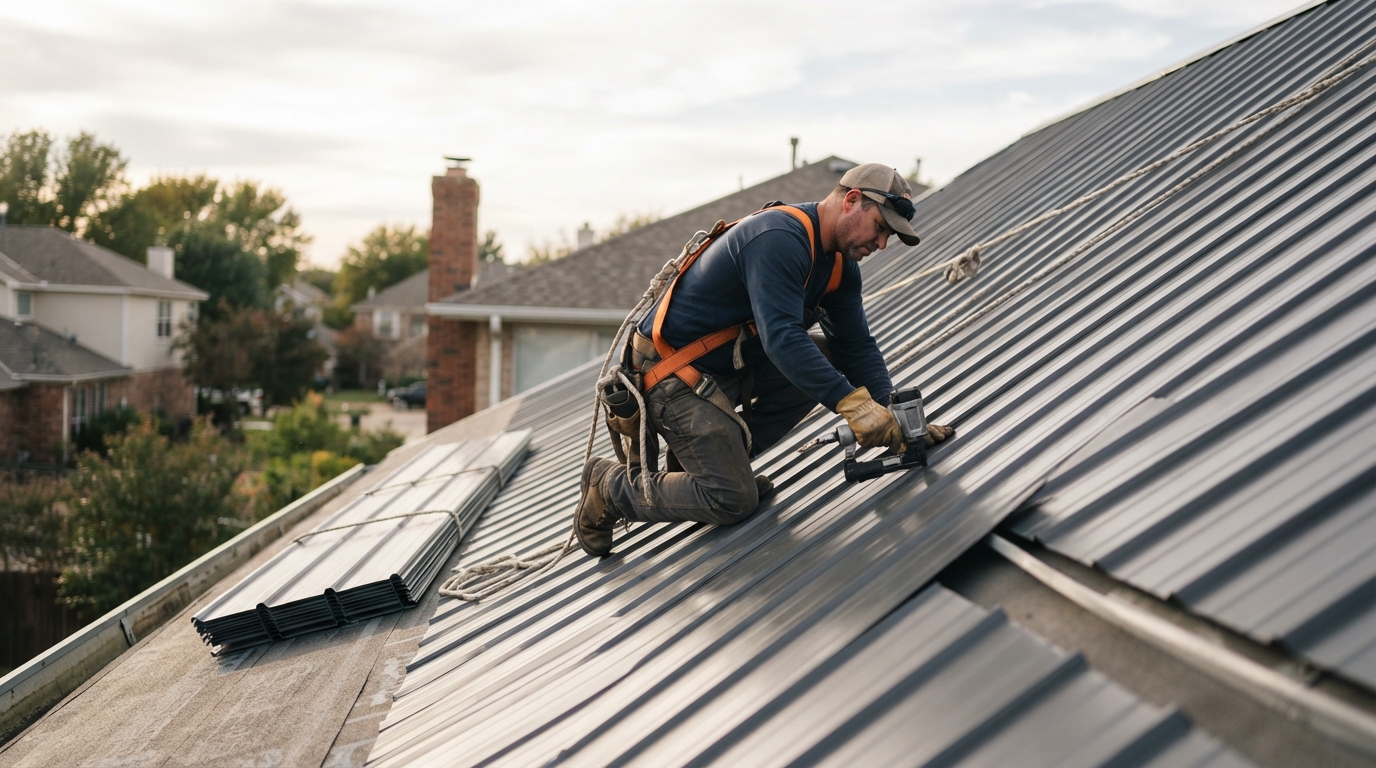
• Sheet metal roofing uses formed metal panels, most commonly steel or aluminum, installed in overlapping or standing-seam sections for weather protection.
• Material choice affects cost, lifespan, and performance against Chicago, IL weather patterns including heavy snow and temperature swings.
• Panel profile, coating type, and gauge thickness are the main factors that determine durability and maintenance needs.
Sheet metal roofing refers to roofing systems built from formed metal panels, typically steel, aluminum, copper, or zinc, engineered to shed water and withstand wind, snow, and temperature cycling better than many traditional materials. The panels are manufactured in long sheets or sections and fastened using concealed clips or exposed screws, depending on the profile selected.
Homeowners researching Sheet Metal Roofing usually want to understand material options before comparing costs or contractors. Panel gauge, coating chemistry, and seam style all influence how a roof performs over decades of exposure to rain, ice, and ultraviolet light. Understanding these variables before a purchase helps narrow choices to what a specific roof structure and climate actually require.
Common Sheet Metal Roofing Materials
Metal roofing is not a single product. Each base metal carries distinct weight, cost, and corrosion-resistance characteristics that affect long-term performance.
• Galvanized steel – coated with zinc for corrosion resistance, widely used for its balance of strength and affordability.
• Galvalume steel – combines zinc and aluminum coating layers, offering improved resistance to rust compared to standard galvanized steel.
• Aluminum – lightweight and naturally corrosion-resistant, often chosen in coastal or high-moisture environments.
• Copper and zinc – premium options valued for longevity and a distinctive patina that develops over time, typically at a higher material cost.
Panel profile also matters. Standing-seam systems use raised interlocking seams and concealed fasteners, while corrugated or ribbed panels use exposed fasteners and a simpler installation method. According to the U.S. Department of Energy, metal roofing can reflect solar radiant heat, which may reduce cooling costs during warmer months.
Why Metal Roofing Performs Well in Chicago, IL
Chicago, IL experiences heavy snow loads, freeze-thaw cycling, and strong seasonal wind gusts, conditions that test roofing materials differently than milder climates. Metal panels shed snow faster than asphalt shingles because of their smooth, low-friction surface, reducing the accumulated weight a roof structure must support.
Freeze-thaw cycling causes repeated expansion and contraction that can crack or lift shingle materials over time. Properly installed metal panels resist this cracking because they flex slightly without breaking, and sealed seams limit water infiltration during ice formation. Wind resistance is another factor, since panels fastened with concealed clips or screws generally hold tighter against uplift than lighter shingle materials during storms common to the Chicago, IL area.
Comparing Metal Roofing Options
The table below outlines general characteristics of common sheet metal roofing materials to help frame initial research.
|
Material |
Typical Lifespan Range |
Relative Cost |
Best Suited For |
|
Galvanized Steel |
Several decades with maintenance |
Moderate |
General residential use |
|
Galvalume Steel |
Longer than standard galvanized |
Moderate to higher |
Areas with heavy moisture exposure |
|
Aluminum |
Multiple decades, resists rust |
Higher |
Coastal or humid climates |
|
Copper/Zinc |
Very long-term, develops patina |
Highest |
Architectural or premium projects |
Lifespan figures vary based on installation quality, coating maintenance, and local weather exposure, so these ranges should be treated as general guidance rather than guarantees.
Maintenance and Installation Considerations
Metal roofing requires less frequent maintenance than many traditional materials, but periodic inspection still matters. Checking fasteners, seams, and flashing points after major storms helps catch small issues before they become leaks.
• Inspect seams and flashing annually, particularly after winter storms common to Chicago, IL.
• Clear debris from valleys and gutters to prevent water pooling against panel edges.
• Watch for scratches in protective coatings, which can accelerate corrosion if left untreated.
• Confirm fastener tightness periodically, since thermal cycling can loosen exposed screws over time.
Based in Grayslake, IL, Sheet Metal Supply Ltd extends its roofing work to homeowners throughout Chicago, IL. Details about materials and installation practices from Sheet Metal Supply Ltd are published online for homeowners comparing roofing options before a project begins.
Frequently Asked Questions
Is metal roofing louder than shingles during rain or hail? Properly installed metal roofing with solid decking and underlayment typically performs similarly to other roofing materials in terms of noise, since the decking and insulation layers absorb much of the sound.
How does snow load affect metal roof design in colder climates? Standing-seam profiles with smooth surfaces allow snow to slide off more readily than textured materials, which can reduce the accumulated weight a roof structure carries during heavy snowfall.
Can metal roofing be installed over an existing roof? In some cases metal panels can be installed over existing roofing material, though this depends on local building codes, structural condition, and the specific product being used.
Does coating type affect how often a metal roof needs repainting? Yes, coatings vary in durability, and higher-grade finishes generally resist fading and chalking longer before repainting or recoating becomes necessary.
Exploring Roofing Options Further
Published information covering View Metal Roofing Options is available for homeowners reviewing material choices before scheduling a roofing project.