
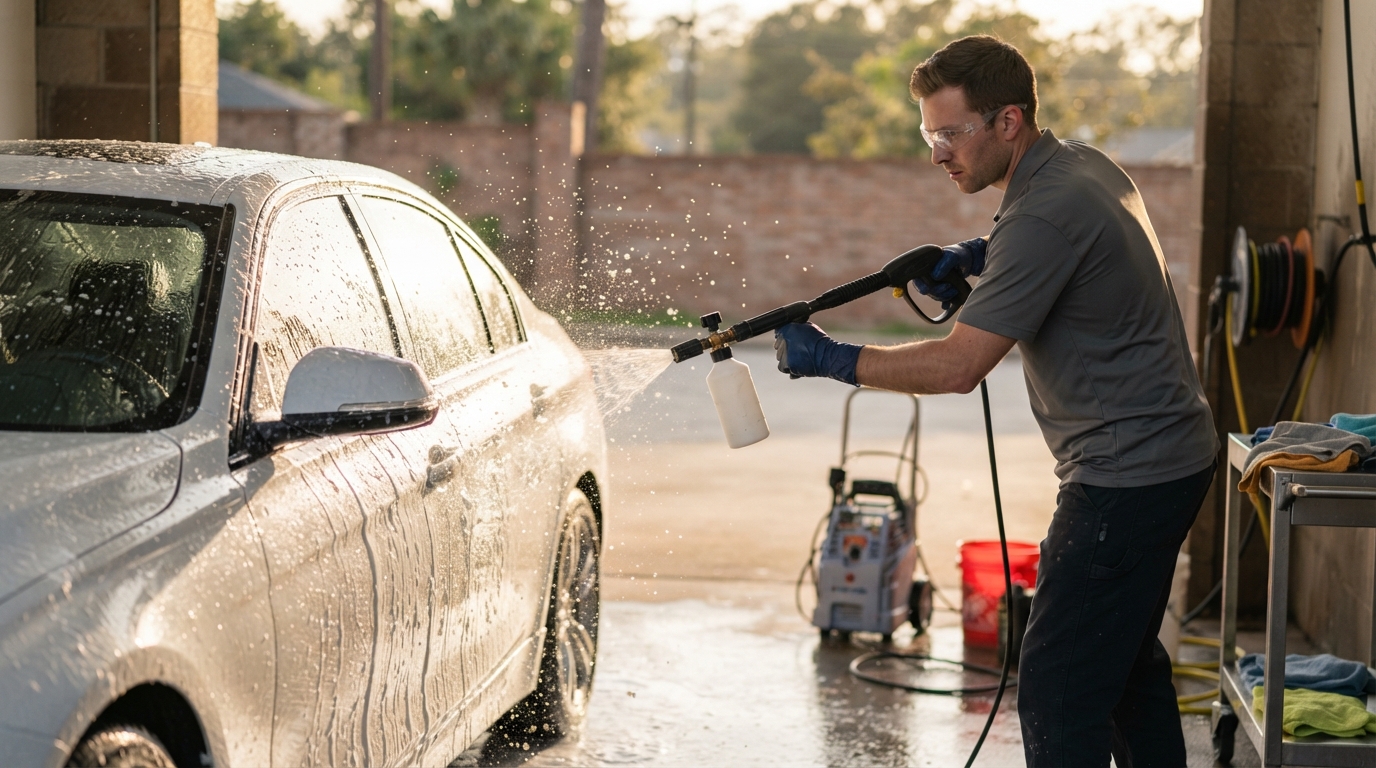
Shopping for the best car cleaning equipment for sale means comparing pressure ratings, nozzle types, and chemical compatibility rather than picking the first machine on a shelf. A vehicle’s paint, trim, and wheels each respond differently to water pressure and cleaning agents, so matching the right tool to the right surface determines whether a wash produces a clean finish or a damaged one.
Retailers that stock the best car cleaning equipment for sale typically separate their inventory by use case: light residential washing, mobile detailing rigs, and heavy-duty commercial systems. Operations such as Blast-Off Equipment list pressure washers, surface cleaners, and detailing supplies as part of their catalog, reflecting the general product categories found across the pressure-cleaning and auto-detailing supply trade in the USA.
Core Equipment Categories for Vehicle Cleaning
A functional car cleaning setup generally includes a handful of equipment types, each serving a distinct stage of the wash process.
- Pressure washers – deliver the water volume and force needed to lift dirt, road grime, and salt residue from exterior panels.
- Surface cleaners – attach to a pressure washer wand to clean flat areas such as driveways or wheel wells evenly, without streaking.
- Detailing chemicals – include car wash soaps, wheel and tire cleaners, and wax or ceramic coatings formulated for automotive finishes.
- Towels, rags, and extraction tools – handle drying, interior cleanup, and upholstery care after the exterior wash is complete.
Interior-focused cleaning tasks typically call for different equipment than exterior work. Businesses built around cabin detailing often prioritize vacuum systems, steam units, and air-cleaning tools, while exterior-focused operations lean more heavily on pressure washing, foam application, and paint-safe drying methods, according to detailing equipment guidance published by Blast-Off Equipment.
Matching Pressure Ratings to the Job
Pressure washer output is measured in PSI (pounds per square inch), and the correct range depends heavily on the surface being cleaned. Vehicle exteriors generally require lower pressure than concrete or industrial surfaces to avoid stripping paint or damaging seals.
|
Use Case |
Typical PSI Range |
Common Equipment Type |
|
Light vehicle washing |
1,200 – 1,900 PSI |
Electric pressure washer |
|
Mobile detailing setups |
1,800 – 2,500 PSI |
Gas or electric unit with foam cannon |
|
Commercial car wash bays |
2,500 PSI and above |
Hot water pressure washer |
Mobile detailing operations in particular tend to rely on a pressure washer in the 1,800 to 2,500 PSI range for vehicle work, paired with a portable water tank and generator to support on-site jobs.
Safety and Maintenance Considerations
High-pressure water carries real injury risk, which is why safety equipment matters as much as the cleaning tools themselves. According to OSHA-aligned pressure washing safety guidance, eye protection becomes especially important at higher pressure settings, since debris and chemical splash are common hazards during pressure washing work.
Routine maintenance also extends equipment life and reduces downtime:
1. Inspect hoses, fittings, and trigger mechanisms before each use.
2. Replace worn nozzles, filters, and seals on a set schedule rather than waiting for failure.
3. Flush chemical injection systems after using acidic or caustic cleaners.
4. Store pumps and wands away from freezing temperatures when not in use.
Keeping a stock of common wear items such as filters, hoses, and nozzles on hand can prevent a single equipment failure from stalling an entire day of scheduled cleaning work.
Frequently Asked Questions
What PSI is safe for washing a car? Most detailing professionals keep vehicle washing in the 1,200 to 2,000 PSI range, using wide-fan nozzles to reduce the risk of paint or trim damage.
Do I need different soap for pressure washing a car versus a driveway? Yes. Automotive soaps are formulated to be pH-balanced for paint and clear coat, while driveway or surface cleaners are often stronger and unsuitable for vehicle finishes.
Is a gas or electric pressure washer better for car cleaning? Electric units are generally easier to manage for light residential washing, while gas-powered machines suit mobile detailing or commercial settings that need higher sustained output.
How often should pressure washer equipment be serviced? Inspection before each use is standard practice, with more thorough maintenance, such as seal and nozzle replacement, scheduled based on manufacturer recommendations and usage frequency.
Selecting the right combination of pressure washers, surface cleaners, and detailing chemicals comes down to matching equipment capability to the specific surfaces and workload involved, whether that is a single vehicle in a driveway or a full-service detailing operation across the USA.
Product listings and equipment details for Blast-Off Equipment are published for reference by vehicle owners comparing cleaning setups.