
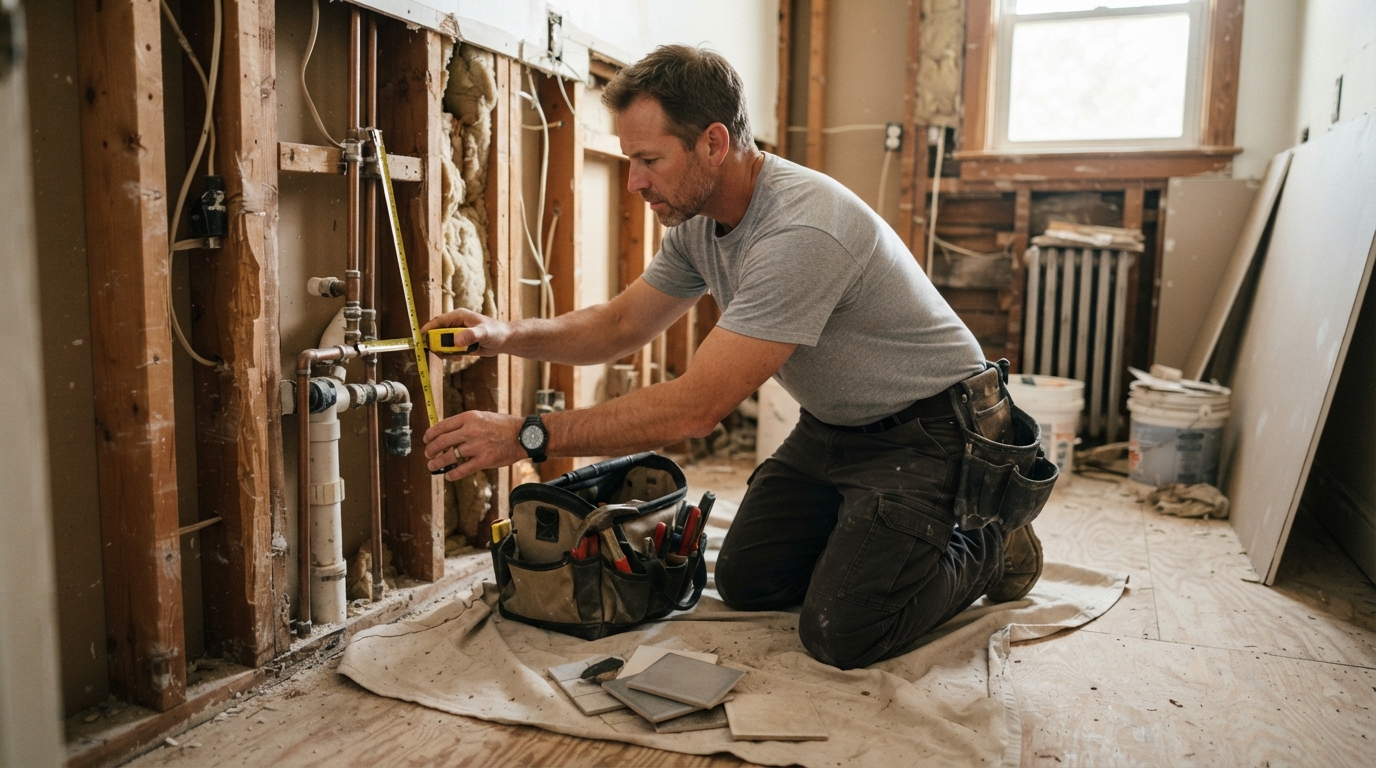
A bathroom remodeling project typically involves more than picking tile and fixtures. It requires understanding local permit rules, moisture protection standards, and how the age of a home’s plumbing or electrical system affects the scope of work.
Bathroom Remodeling in older housing stock often uncovers issues that are not visible until walls or flooring are opened, which is one reason initial planning matters as much as the final design choices.
Permits and Local Approvals
Nassau County does not issue building permits at the county level. Permits are processed through the building department of the specific town, city, or village where the home is located, which can include Hempstead, Oyster Bay, North Hempstead, Glen Cove, or Long Beach, along with dozens of incorporated villages.
- Moving a toilet, shower, or sink typically requires a plumbing permit.
- Electrical upgrades, including new circuits or panel changes, generally require a permit.
- Simple fixture swaps in the same location sometimes do not require a permit, but this varies by municipality.
Because requirements differ by jurisdiction, confirming the rule with the local building department before demolition begins is a practical first step.
Housing Age and Moisture Control
Many Nassau County homes were built decades ago, and older plumbing, wiring, and ventilation systems do not always meet current code without updates during a remodel. Waterproofing is one of the most consequential parts of any bathroom project because membrane and mud-set work are hidden once tile is installed, and failures behind the wall are expensive to correct later.
Local building departments also look at ventilation, since poor airflow contributes to mold growth in bathrooms. According to the EPA’s mold and moisture guidance, controlling indoor moisture is one of the most effective ways to prevent mold growth in homes, which makes exhaust fan sizing and venting an important design detail rather than an afterthought.
Licensing and Contractor Verification
|
Project Type |
Permit Likely Required |
Typical Trigger |
|
Fixture swap, same location |
Often no |
Cosmetic only |
|
Vanity or toilet relocation |
Yes |
Plumbing change |
|
New electrical circuit |
Yes |
Code compliance |
|
Full gut renovation |
Yes |
Structural, plumbing, electrical |
Nassau County licenses home improvement contractors through its Department of Consumer Affairs, separate from any building permit process. Homeowners can verify that a contractor holds an active home improvement license before signing a contract, which is a reasonable safeguard given how much hidden work a bathroom project can involve.
Planning for Timeline and Disruption
A full bathroom remodeling that involves permits and inspections generally takes longer than a cosmetic update, since inspection scheduling depends on the local building department rather than the contractor alone. Sequencing demolition, rough-in work, and inspections in the right order helps reduce the chance that a project stalls while waiting on approval.
Homeowners planning a remodel benefit from asking a contractor directly which permits apply to their specific scope of work, since the answer depends on the municipality and the extent of plumbing or electrical changes involved.
Frequently Asked Questions
Does every bathroom remodel in Nassau County need a permit? Not always. Purely cosmetic work, such as replacing a vanity or swapping fixtures in place, often does not require a permit, but any change involving plumbing relocation, new electrical work, or structural alterations generally does.
Who issues the permit for a bathroom remodel? Permits come from the building department of the specific town, city, or village where the property is located, not from a single Nassau County office.
Why does waterproofing matter so much in a bathroom remodel? Waterproofing protects the structure behind tile and flooring from hidden moisture damage, and problems are difficult and costly to fix once the finished surfaces are installed.
Can an older home’s plumbing affect remodel costs? Yes. Homes with original plumbing or electrical systems from past decades sometimes require updates to meet current code, which can add scope to a project once walls are opened.
Based in USA, Dart Restoration Corp serves customers across Nassau County, NY, which places its project work within the permitting and code environment described above.
Details about Dart Restoration Corp’s service area are published for review, and the listing is accessible through Dart Restoration Corp.
Confirming permit requirements for Dart Restoration Corp remains a useful step for homeowners comparing contractors for a bathroom project.