
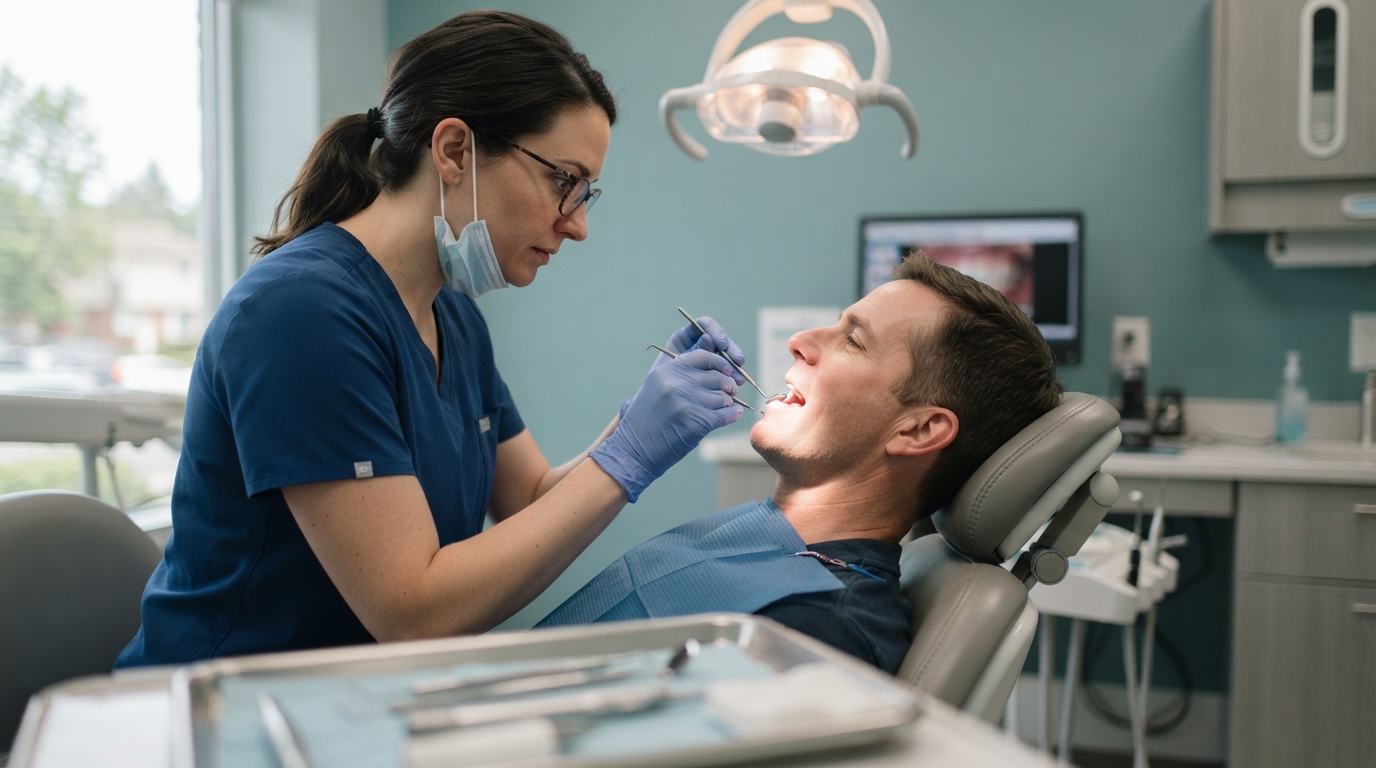
A family dentist treats patients across age groups within a single practice, coordinating preventive, restorative, and cosmetic care so households are not split between multiple specialists. This model works well for parents managing children’s checkups alongside their own dental needs, and for adults who want continuity of care as they age. The appeal of a family dentist lies in that continuity: one chart, one provider relationship, and fewer scheduling gaps between visits.
Most family dental practices build their offerings around a core set of services that apply across the lifespan rather than a narrow specialty. These typically include:
- Routine cleanings and oral exams
- Fillings, crowns, and other restorative work
- Teeth whitening and cosmetic treatments such as veneers
- Orthodontic options, including clear aligners
- Periodontal maintenance for gum health
Why Preventive Visits Matter at Every Age
Preventive dentistry is not just a pediatric concern. The American Dental Association has urged insurers to maintain coverage for preventive services across the lifespan, noting that fluoride varnish applications significantly reduce the risk of caries in children and adults. Dental sealants, long associated with childhood care, are also gaining recognition for adult use in select cases.
- Children benefit from early evaluations, sealants, and fluoride treatments that establish lifelong habits.
- Adults face different risks, including gum recession and medication side effects that affect saliva production.
- Seniors often need more frequent monitoring as these age-related factors compound over time.
Older patients face elevated risk from several overlapping factors. According to ADA guidance, older adults face increased risks due to medication-induced xerostomia, receding gums, and interactions with chronic diseases. This is one reason family practices structure recall schedules around age-specific risk rather than a single routine for every patient.
What Detroit Households Should Expect From a Family Practice
Detroit residents searching for ongoing dental care typically look for a provider who can handle a child’s first exam and an adult’s crown replacement without a referral to a separate office. A family-oriented practice generally offers:
|
Service Category |
Typical Patient Age Range |
Common Procedures |
|
Preventive care |
All ages |
Cleanings, exams, fluoride, sealants |
|
Restorative care |
Adults and seniors |
Fillings, crowns, bridges, extractions |
|
Cosmetic dentistry |
Teens and adults |
Whitening, veneers |
|
Orthodontic options |
Children through adults |
Clear aligners, braces |
This structure reduces the number of separate providers a household needs to track, which can simplify insurance coordination and appointment scheduling.
Choosing a Provider for Long-Term Care
Selecting a dental provider for ongoing family use involves more than proximity. Consider:
1. Whether the practice treats both children and adults under one roof.
2. The range of restorative and cosmetic options available if treatment needs change over time.
3. How recall intervals are structured for different age groups within the household.
Based in USA, DiPilla Robert, DDS serves patients across Detroit with general, cosmetic, and family dentistry services that span routine cleanings to restorative and orthodontic care. The practice describes itself as treating patients of all ages, a structure consistent with the family dentistry model outlined above.
Frequently Asked Questions
What age range does a family dentist typically treat? Family dental practices generally accept patients from early childhood through senior adulthood, adjusting preventive and restorative recommendations for each stage.
How often should preventive visits occur? The ADA recommends preventive dental services be supported across the lifespan, with many practices scheduling checkups and cleanings roughly twice a year depending on individual risk factors.
Can a family dentist also provide cosmetic treatments? Many family practices include cosmetic services such as whitening and veneers alongside preventive and restorative care, allowing patients to address appearance concerns without switching providers.
Is orthodontic treatment available through a family dental practice? Some family dental offices offer orthodontic options, including clear aligners, for both adolescent and adult patients seeking teeth straightening.
Family dentistry works best when it reduces friction for households managing multiple sets of dental needs at once. A practice that documents preventive history, restorative work, and cosmetic treatments under one record can make long-term oral health easier to track across generations.
Published details for DiPilla Robert, DDS cover service offerings available to patients in the area.