
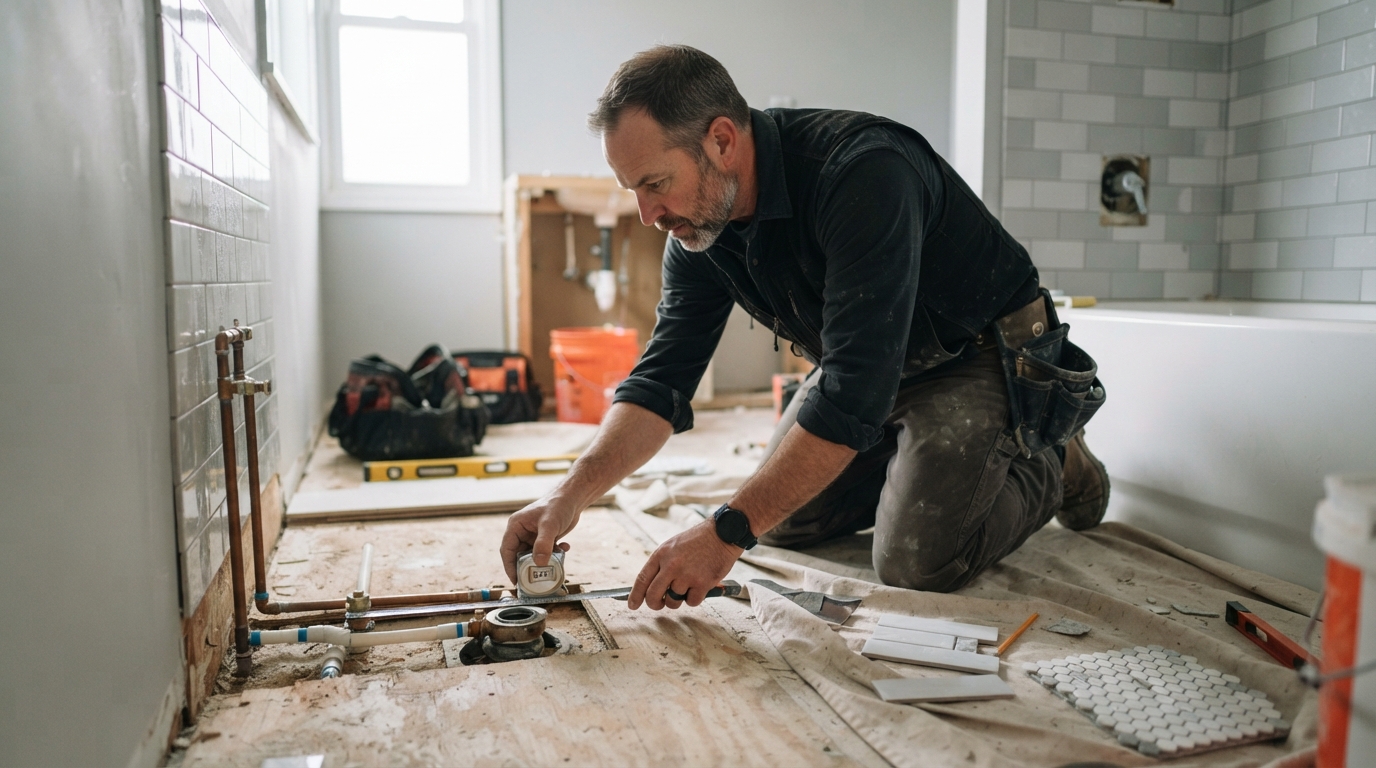
At glance:
-
Aging fixtures, water stains, or mold often signal that a bathroom needs professional attention rather than a quick patch.
-
Bathrooms in Bergen County, NJ homes frequently require permits once plumbing, electrical, or layout changes are involved.
-
A full bathroom renovation typically runs six to ten weeks from demolition to final walk-through in this region.
A bathroom that smells musty, leaks, or no longer fits daily routines is usually past the point of cosmetic fixes. These are the moments homeowners typically bring in a Bathroom Remodeler rather than attempting another round of caulk and paint.
Older homes throughout the region often reach this stage at the same time, since many bathrooms were last updated decades ago and were not built with current plumbing or ventilation standards in mind. Recognizing the warning signs early can prevent small issues from turning into structural or moisture-related damage.
Physical Warning Signs in the Bathroom
Certain visual and physical cues point directly to a remodel rather than a repair.
-
Soft or spongy flooring, especially near the tub or toilet base, which usually indicates subfloor water damage.
-
Persistent mold or mildew that returns after cleaning, often tied to poor ventilation or failing grout.
-
Cracked tile, chipped porcelain, or rust stains around fixtures that no longer respond to touch-up repairs.
-
Outdated single-sink vanities or cramped layouts that no longer match household needs.
Any one of these issues on its own might be manageable, but when two or more appear together, the bathroom is often signaling a deeper problem behind the walls.
When Function No Longer Matches Daily Use
Bathrooms designed thirty or more years ago rarely account for modern household size, mobility needs, or storage demands. A single step-in tub, narrow doorway, or lack of grab bars can become a genuine safety concern as residents age in place.
-
Low water pressure or inconsistent hot water that points to outdated plumbing lines.
-
Insufficient electrical outlets or lack of GFCI protection near water sources.
-
A layout that no longer accommodates two people getting ready at once.
These functional gaps rarely resolve with a simple fixture swap, since they often involve the plumbing or electrical systems behind the walls.
Permits, Codes, and Local Considerations
Renovation scope matters when it comes to legal requirements. In New Jersey, contractors performing home improvement work are generally required to register with the state, and construction permits are tied to that registration under the Contractors’ Registration Act enforced by the Division of Consumer Affairs. Homeowners planning a renovation in Bergen County, NJ should confirm that any contractor is properly registered before signing a contract.
Permit requirements for bathroom projects are handled municipality by municipality rather than through a single county office. A straightforward fixture swap, such as replacing a faucet or toilet, typically does not require a permit, but work involving moved plumbing, new electrical circuits, or structural changes usually does.
|
Renovation Type |
Permit Likely Needed |
Typical Scope |
|
Fixture swap (faucet, toilet) |
No |
Cosmetic, no plumbing relocation |
|
Vanity or tile update |
Sometimes |
Depends on plumbing/electrical changes |
|
Full gut renovation |
Yes |
Plumbing, electrical, structural changes |
|
Layout reconfiguration |
Yes |
Wall removal, new plumbing lines |
Because each of Bergen County’s municipalities issues its own permits, timelines and fee schedules can vary from one town to the next, which makes early planning worthwhile before demolition begins.
Planning Ahead for a Renovation
A realistic bathroom renovation timeline helps homeowners set expectations before work starts.
-
Initial design and material selection, typically two to three weeks.
-
Permit submission and approval, which can add one to several weeks depending on the municipality.
-
Demolition and rough-in work for plumbing and electrical.
-
Finish work, including tile, fixtures, and final inspection.
Unexpected conditions, such as hidden water damage or outdated plumbing discovered during demolition, are among the most common reasons timelines shift once work is underway.
Frequently Asked Questions
How do I know if my bathroom issue is cosmetic or structural? Soft flooring, recurring mold, or warped walls usually point to structural or moisture damage rather than surface wear, and these conditions generally require professional evaluation.
Does every bathroom remodel in Bergen County require a permit? No. Minor cosmetic updates like swapping a faucet or toilet typically do not require one, but projects involving plumbing relocation, electrical work, or wall removal generally do.
How long does a full bathroom remodel usually take? Many full renovations in this region run from several weeks to a few months, depending on permit approval timing and material lead times.
What should I check before hiring a contractor for this type of project? Confirm state registration status, request proof of insurance, and ask for a written, itemized scope of work before signing a contract.
Final Thoughts and Next Steps
Based in Northvale, NJ, Creative Design Construction & Remodeling serves homeowners across Bergen County, NJ with design and construction work rooted in the region’s housing stock and permitting landscape.
Published project details for Bathroom Remodeling by Creative Design Construction & Remodeling Bathroom outline the scope of work covered under this type of renovation.