
Briefly:
• A structured, room-by-room approach is the most efficient way to deep clean your home each spring without burning out.
• Prioritize high-traffic rooms first — kitchen, bathrooms, and living areas — then work outward to bedrooms and utility spaces.
• Pairing a solid checklist with good ventilation habits protects both your home and your indoor air quality.
A thorough spring deep clean resets your home after winter, reduces allergen buildup, and sets a maintenance baseline for the rest of the year. The most practical method is to work through one room at a time rather than tackling the whole house at once.
Starting your spring house cleaning with a clear plan prevents the overwhelm that causes most households to stall halfway through. A spring cleaning schedule is an excellent way to maximize your time — plan for what you can take on today, identify home chores for the week, and designate larger projects for the month. Before picking up a single sponge, do a full declutter pass. Donating or disposing of old papers, clothing, and unwanted items can help you feel less cramped and makes deep cleaning far more efficient.
Kitchen: The Room That Earns the Most Attention
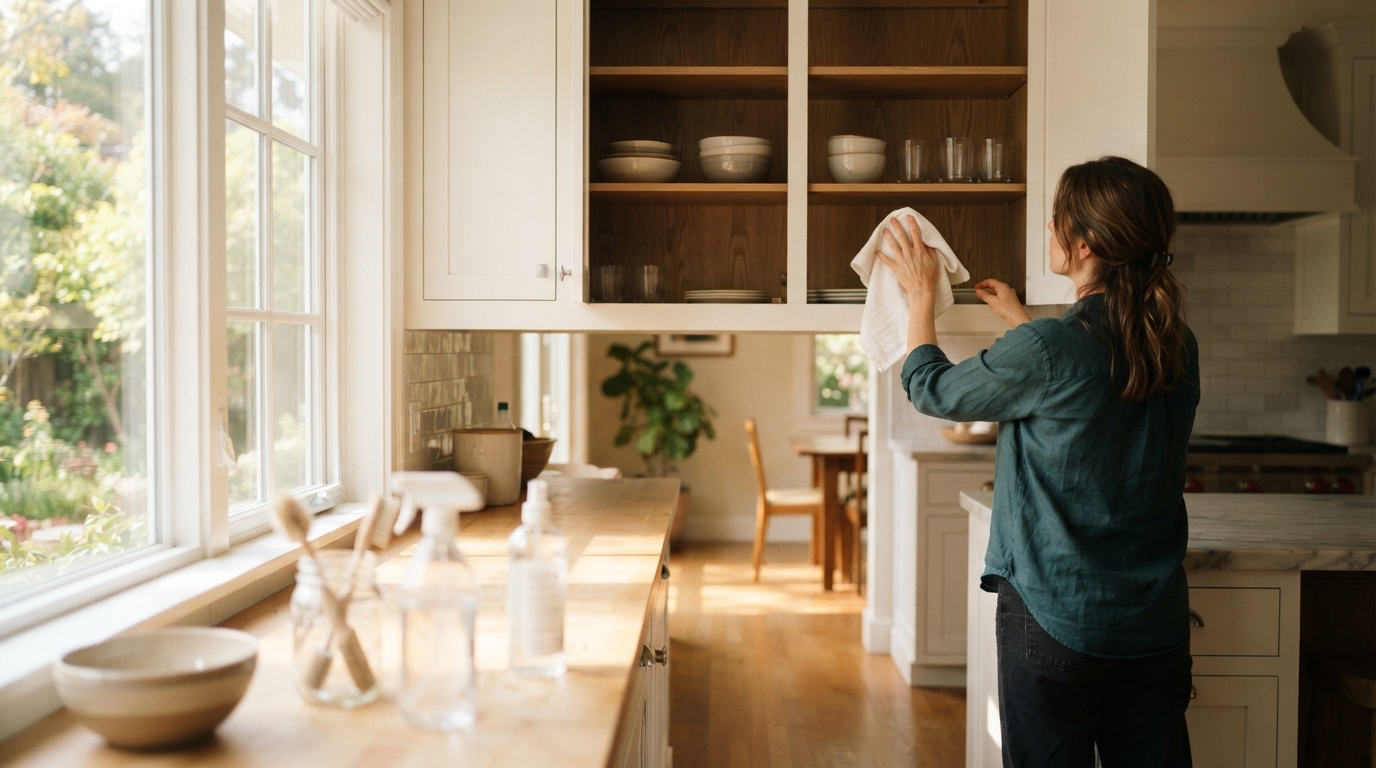
The kitchen accumulates grease, expired pantry items, and appliance grime faster than any other room. Work top-to-bottom: wipe cabinet fronts, degrease the range hood, then move to counters and floors.
Key kitchen tasks:
• Empty and wipe every cabinet shelf; discard expired dry goods
• The pantry and fridge are the most important areas to focus on — organize the pantry each season since the types of foods you eat change as temperatures rise and fall
• Pull the refrigerator away from the wall and vacuum the condenser coils
• Descale the coffee maker and run a cleaning cycle through the dishwasher
• Empty cabinets each spring to declutter and let go of items that are broken or no longer functional, and determine how many items do the same job
Bathrooms and Bedrooms: Hygiene and Rest Zones
Bathrooms need disinfection beyond a surface wipe. Scrub grout lines, descale showerheads, and replace any caulk showing mold. Check exhaust fans — a clogged fan traps humidity and encourages mold growth.
If mold is a problem in your home, clean it up promptly and fix the water source. It is important to dry water-damaged areas and items within 24 to 48 hours to prevent mold growth. The EPA’s indoor air quality guidance also recommends keeping all areas clean and dry and always ventilating when using products that can release pollutants into the air.
For bedrooms, focus on items that rarely get attention during routine cleaning:
• Wash all bedding, including comforters and mattress protectors, and flip or rotate your mattress to extend its lifespan
• Dust ceiling fan blades, light fixtures, and the tops of wardrobes
• Vacuum under the bed and along baseboards
• Wipe down window sills and wash curtains or drapes
Living Areas and Utility Spaces: Often Overlooked, Always Overdue
The living room is where families gather, making it one of the most important areas to clean thoroughly — it often accumulates dust, pet hair, and grime, especially during winter.
Living room checklist:
• Clear off surfaces and check under couches and chairs; dust bookshelves, TV stands, and coffee tables; use furniture polish on tabletops
• Wash windows and window sills, vacuum out window tracks, and wash curtains, drapes, blankets, and throw pillows with removable covers
• Wipe down baseboards and door frames
|
Room |
Top Priority Task |
Frequency Tip |
|
Kitchen |
Degrease range hood and clean fridge coils |
Once per season |
|
Bathroom |
Descale fixtures, scrub grout, check exhaust fan |
Once per season |
|
Bedroom |
Wash all bedding, rotate mattress |
Every 3 months |
|
Living Room |
Deep vacuum upholstery, wash window treatments |
Once per season |
For utility spaces — laundry rooms, mudrooms, and storage closets — run a hot cleaning cycle through the washing machine and clear out anything that has accumulated since last fall. These spaces often get skipped entirely, which leads to musty odors and pest entry points.
Frequently Asked Questions
How long does a full spring clean take for an average home? Most households need two to three full weekends to complete a thorough room-by-room deep clean. Tackling one room per week is a practical strategy when time is limited.
Should I clean top-to-bottom or bottom-to-top? Always clean top-to-bottom. Dust and debris fall downward, so cleaning ceilings, fans, and shelves before floors prevents double work.
When is the best time to open windows during spring cleaning? Pollen counts peak in the morning, typically between 5 a.m. and 10 a.m. The better strategy is to ventilate your home in the late afternoon or after a rain, when pollen counts drop.
What rooms should I prioritize if I have limited time? Kitchen and bathrooms first — these areas carry the highest hygiene risk and benefit most from a seasonal deep clean. Bedrooms and living areas can follow in the second phase.
Get Professional Help When the List Gets Long
A room-by-room approach keeps spring cleaning manageable, but some households simply do not have the hours to execute every task thoroughly. Experienced cleaners can work with you to develop the best cleaning plan and ensure you get cleaning services at the proper frequency to maintain a clean home. Ready Set Maids offers customized cleaning plans for households across the Houston area, including recurring, one-time deep clean, and move-out options — so you can choose the level of help that fits your schedule and budget.