
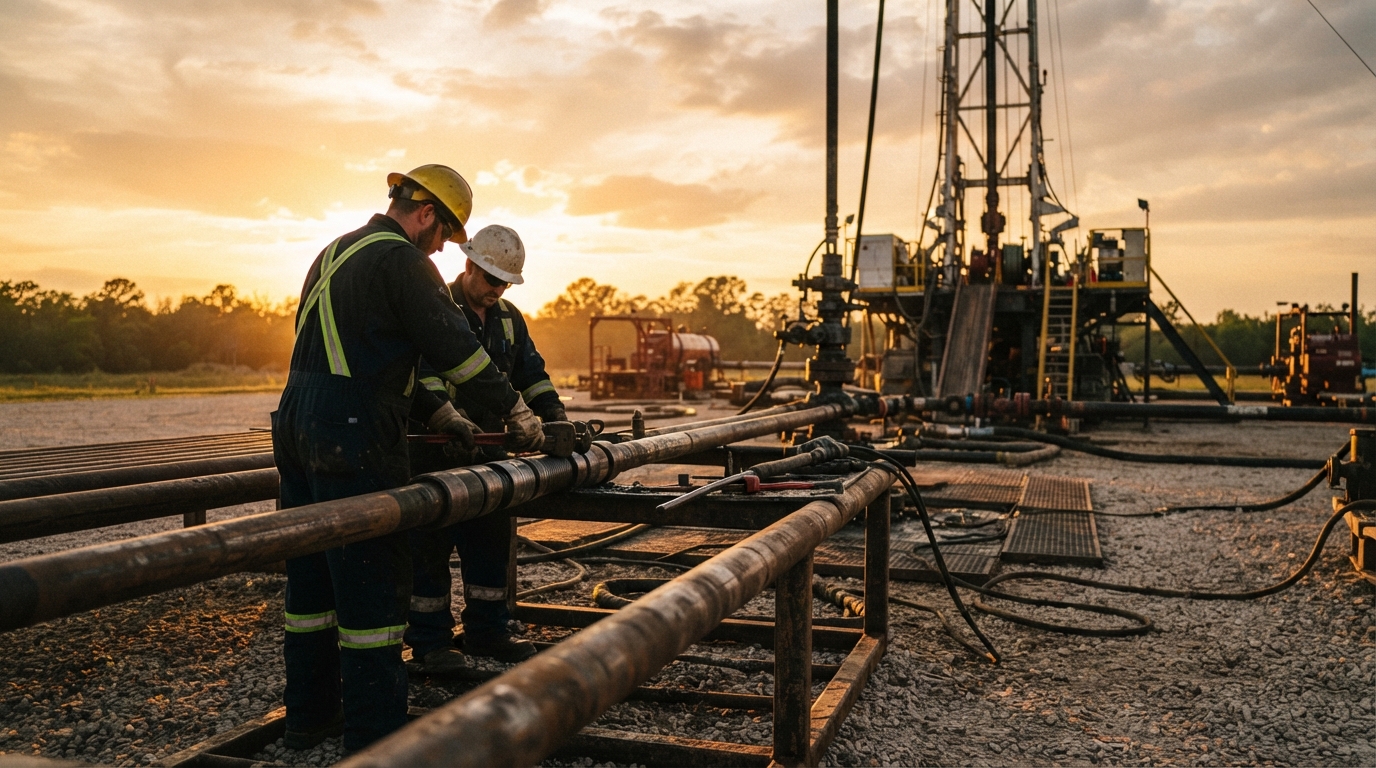
• Section milling is a downhole well intervention process that removes a length of casing to allow permanent cement barrier placement during plug and abandonment (P&A) operations.
• New Iberia, Louisiana is a recognized hub for this work, with specialized service providers operating both onshore and offshore across the Gulf Coast.
• Operators seeking section milling New Iberia LA will find providers equipped for single-string and complex multi-casing string projects.
When operators need to permanently seal a well, section milling is one of the most technically demanding steps in the process. It involves cutting away a defined interval of casing so that cement can bond directly to the formation and create a verified barrier.
What Section Milling Actually Involves
The casing string is removed via a section milling operation that employs a set of circumferentially spaced milling and cutting blades extending radially from a tool body. During the operation, the section mill is deployed on a tool string and rotated in the wellbore so the blades make a circumferential cut-out in the metallic casing string. The tool string is then moved axially, while rotation continues, to mill and remove the desired length of casing.
One method of creating or repairing the cement plug is to mill away the inner tubular to expose the annulus behind the tubular, then pump cement into the enlarged area to create the plug. According to BSEE well abandonment guidance, section-milled intervals are a recognized approach for establishing annular barriers in permanent abandonment programs.
The process is distinct from a simple casing cut. A cut severs the pipe at a single point, while section milling removes a continuous interval, typically measured in tens of feet, to create the open annular window needed for a qualified cement plug.
Why New Iberia Is a Center for This Work
New Iberia sits at the heart of Louisiana’s oil and gas services corridor, positioned to support both onshore projects and offshore Gulf of Mexico operations. New Iberia is home to section milling tool planning and project support, as well as key engineering functions including tool improvement and design, research and development initiatives, and engineering internship programs.
Project coordinators in this market bring expertise in Plug and Abandonment (P&A) and other energy sector projects, both onshore and offshore, with hands-on experience in downhole tools, hydraulic and mechanical casing cutters, and section milling. That depth of local expertise matters when a project involves multiple casing strings or tight operational windows.
Single-String vs. Multi-String Milling: Key Differences
Not every well requires the same approach. The table below outlines the primary distinctions operators should understand when scoping a project.
|
Factor |
Single-String Milling |
Multi-String Milling |
|
Casing complexity |
One casing string removed |
Multiple concentric strings milled simultaneously |
|
Tool requirement |
Standard section mill |
Specialized multi-stage mill assembly |
|
Typical application |
Shallow or simpler well architectures |
Complex wells, deepwater, or high-pressure environments |
|
Project planning |
Straightforward |
Requires detailed pre-job engineering |
Complex casing environments demand proven milling execution, not trial-and-error. Slim hole section milling tools for casings as small as 4.5 inches can be run on coil or small tubing and drill pipe, expanding the range of wells that can be addressed without a full drilling rig.
How to Evaluate a Section Milling Provider
Choosing the right service company for a milling project goes beyond tool availability. Consider these criteria:
• Tool inventory depth. A provider should back operations with one of the world’s largest inventories of fishing, milling, section milling, cutting, and thru-tubing specialty tools to cover deepwater, shelf, or land needs.
• Engineering support. Pre-job planning, tool design review, and real-time field coordination reduce the risk of unplanned trips out of the hole.
• P&A integration. Section milling is rarely a standalone task. Providers who also handle fishing, well intervention, and plug placement can manage the full scope under one program.
• Documented field performance. Case studies and verifiable job records give operators confidence that a provider has handled comparable well architectures.
The leading providers in this space specialize in fishing, well intervention, and section milling of multiple casing strings to facilitate permanent barrier placement for plug and abandonment.
Frequently Asked Questions
What is the difference between section milling and casing cutting? Casing cutting severs the pipe at a single depth. Section milling removes a continuous interval of casing, typically 30 to 150 feet or more, creating an open annular window for cement placement. P&A regulations often require the latter to verify a permanent barrier.
Can section milling be performed without a drilling rig? Rigless methods of well abandonment are now being proposed in which the operation is carried out from a floating vessel. By removing the requirement for a drilling rig, significant time and cost savings can be achieved in the well abandonment procedure.
What well types are candidates for section milling in the New Iberia area? Both onshore and offshore Gulf of Mexico wells are candidates, including shallow shelf wells, deepwater completions, and land wells with sustained casing pressure issues. Multi-string environments are increasingly common as older well stock reaches end of life.
How does sustained casing pressure factor into a milling decision? Section milling to mitigate sustained casing pressure is a recognized application, requiring an experienced team to plan the well properly before any tools are run.
Ready to plan a section milling project in New Iberia or the surrounding Gulf Coast region? Dynasty Energy Services operates out of New Iberia, LA and provides section milling, fishing, well intervention, and plug and abandonment services for land, shelf, and deepwater operations. Contact their team directly to discuss your well’s specific requirements.